
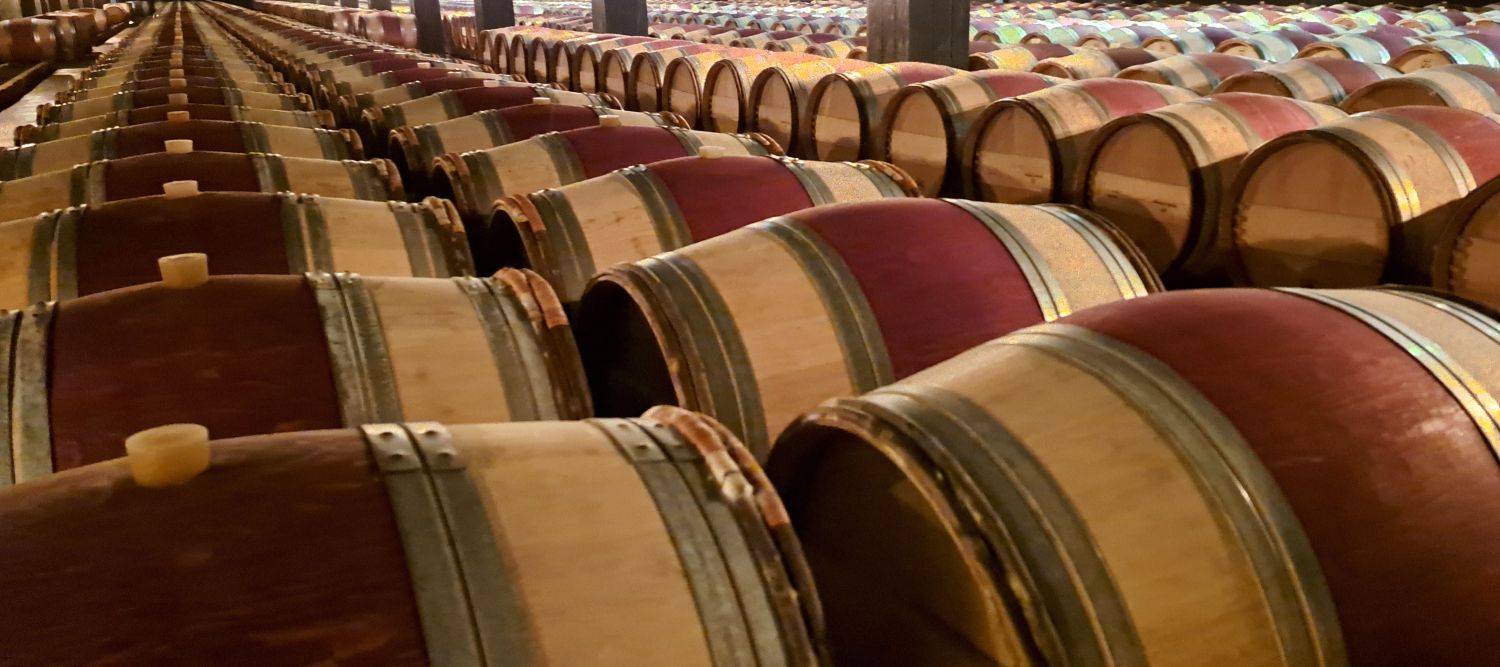
Oak barrels at Château Smith Haut Lafitte, Graves Great Growth vineyard. Photo GLK.
I considered titling this article Graves at Home and for Travelers, but that sounds a bit morbid for a Bordeaux education that should toast good health, close friends and happy travels. So let’s get something straight from start as I lead you into the world of Graves, the winegrowing zone that’s closest to the city of Bordeaux: It’s pronounced grav—grraav, if you’d like to accentuate the pleasure.
Your pronunciation of the word won’t affect the taste of the wines, but speaking of Graves as you would plots in a cemetery could get you off to an awkward start when ordering a bottle in France or when announcing to your wife that you’d like to celebrate a milestone birthday or anniversary in Graves.
Graves—grav—refers to the gravel, small pebbles and sand that mark the left bank of the Garonne River. Think of it as gravelly. Graves is the only designated winegrowing zone in France that is named for the ground itself, though there are different soils and subsoils here in a landscape dotted by wooded areas and traversed by streams. The growing zone is attractive enough though without the rolling hills or striking valley views or terraced vines that can make other winegrowing areas so photogenic. Nevertheless, the drinkable pleasure of the wines themselves and the variety of wine touring experiences—from a 5€ tasting to a private 295€ dinner, and certainly more—combined with easy access from Bordeaux make the Graves winegrowing region an (increasingly) appealing destination for wine-curious travelers. That makes Graves for a good place for me to start stepping beyond the city of Bordeaux in this series of articles about wine touring the region. It makes Graves stepping stone on your Bordeaux education at home as well.
If you’re already familiar with the geography and grape varieties in the Graves winegrowing region and would like to skip this introduction to go directly to my description of the nine vineyards and wine touring experiences that are at the heart of this article, scroll down to the vineyards themselves. They are as follows:
1. Château de Portets – A charming, easy-going, accessible introduction to Graves.
2. Château Smith Haut Lafitte – A classy education in oak aging and more, with an affiliated luxury hotel and spa next door.
3. Château Couhins – Where researchers make fine wines, and where climate change leads to innovation.
4. Château Haut-Bailly – An exquisite educational experience in the winery, at the tasting table, and over lunch. Luxury lodging available.
5. Château Haut-Brion – An estate that holds a supreme place in the history of Graves wines. This is the only one of these nine that I have not yet visit.
6. Chateau Larrivet Haut-Brion – Where the owning family presents their sense of “modern” Bordeaux wines.
7. Château Malartic Lagravière – Beyond a fine wine tasting or pairing, possibility of a graceful lunch or a lunchtime cooking class.
8. Château Léognan – A brief tasting followed by a pleasant meal and a 5-star night’s sleep.
9. Château Jouvente – Personable attention and pairing tastings at a family estate near Sauternes. Also has a showroom in Paris.
If you haven’t yet scrolled past, allow me to open the door for your future Graves adventures, whether in the bottle at home or on the road in France.
Where is Graves?
In An Introduction to a Bordeaux Education I set the stage for explorations of Bordeaux and the Bordeaux winegrowing region. This series of articles shows travelers how to enjoy wine touring throughout the region whatever your educational goals, while also providing restaurant and lodging suggestions and opportunities for non-wine-related discoveries along the way.
The present article examines the Graves wine growing zone, which includes the Pessac-Léognan appellation or designation of origin. Let’s get situated on this simplified Bordeaux map. (A detailed map further below indicates the location of the 9 châteaux described in this article.)
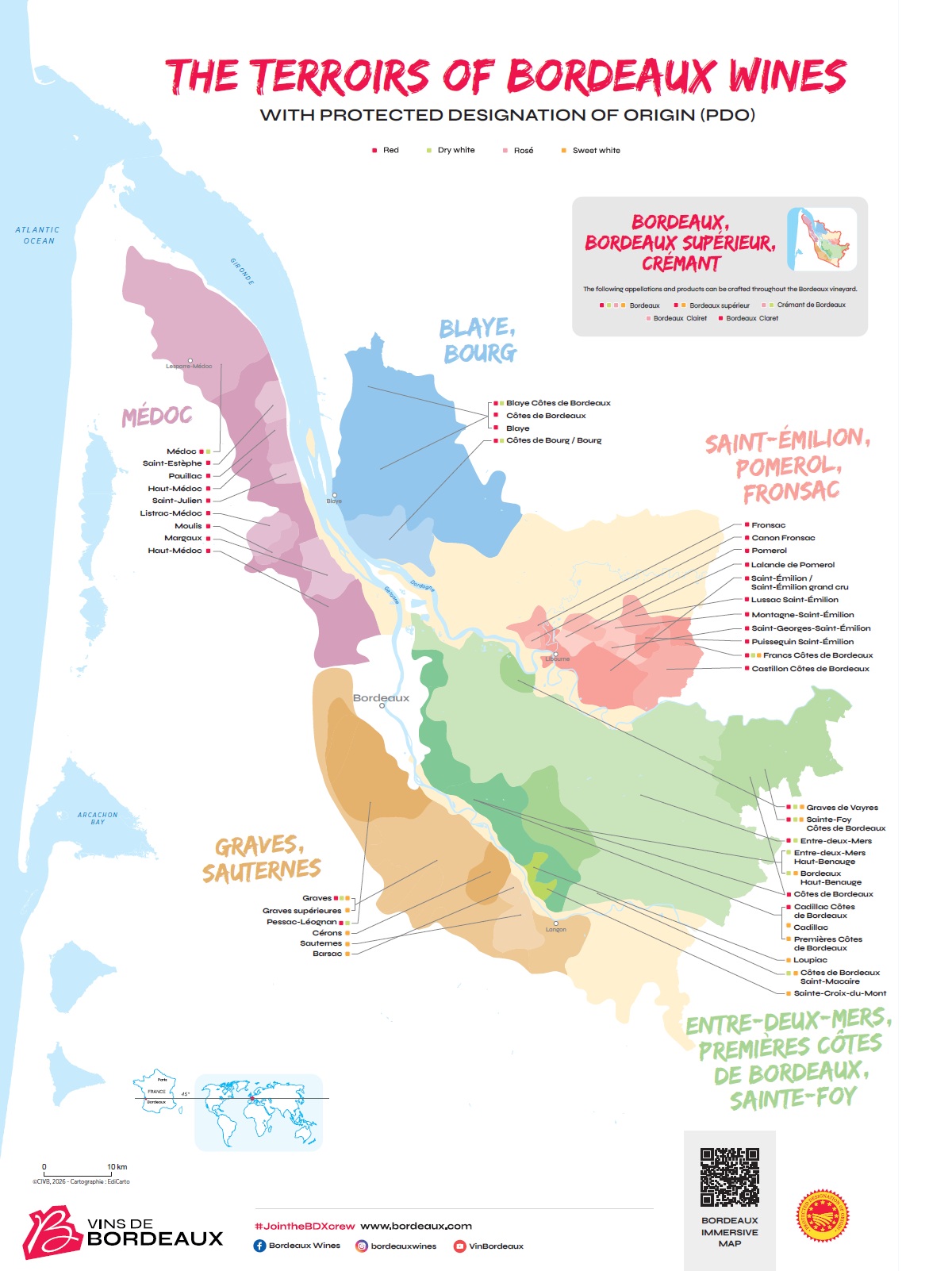
As you see on the map, most of the Graves (including Pessac-Léognan), in brown and tan, lies just upstream (meaning southeast) from Bordeaux on the left bank of the Garonne River. At its furthest end, we enter the territory of the sweet wines of Sauternes, made from the same grape varietals used for Graves whites. Taken together, this forms a 30-mile stretch of wine territory leading southeast from Bordeaux.
That stretch is officially promoted as the Bordeaux Wine Route in Graves and Sauternes. I will be treating Sauternes in a separate article, so think of this as part one for that route, with part two coming in December. Anyone planning on visiting the area covered in this first article should read that as well.
I write this as neither a connoisseur, nor a sommelier, nor a wine writer per se, but as a travel journalist, lecturer (including about wine regions in France), and travel advisor—as well as a curious wine drinker embarking on my own Bordeaux education. I do not intend to recommend one wine over another but to suggest travel experiences that can be enjoyable, entertaining and instructive and that can also help the non-professional better read a wine list or talk the talk in a wine shop at home.
To professionals reading this series, I apologize in advance for any misconceptions or over-simplifications that I may write about the wines and vineyards discussed. Feel free to send me a message to correct or enrich my descriptions. For vineyard owners, feel free to send me information about the interest of visiting your vineyard.
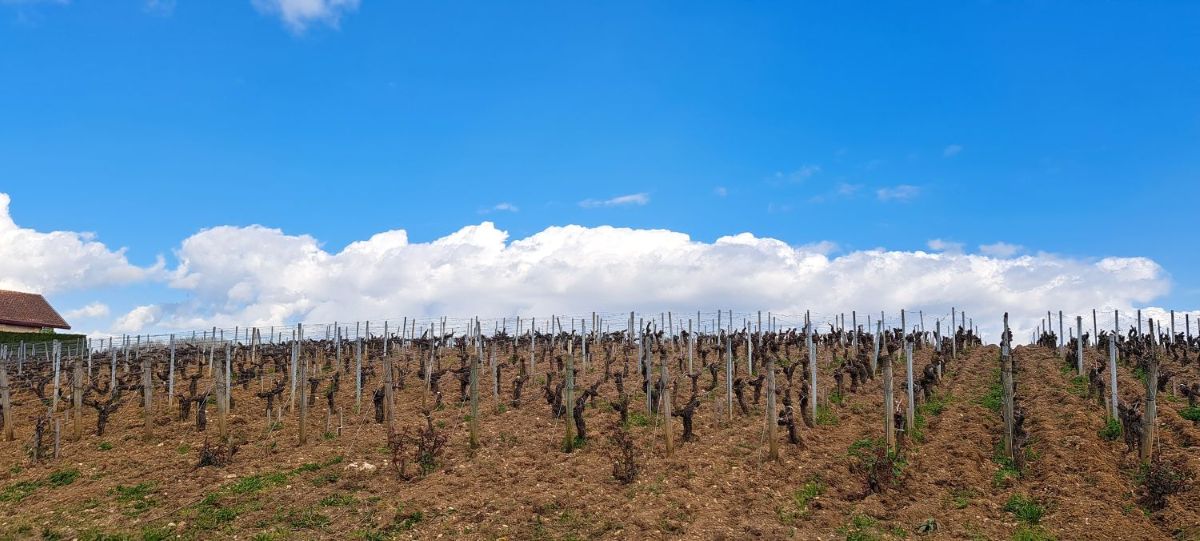
Main Bordeaux Grape Varietals
Two basic pieces of information form the foundation of a Bordeaux education. First, the map above, and second, the names of the main grapes grown in the region and often blended in these wines. When traveling in the Bordeaux region, it doesn’t take long to have a sense of the diversity of Bordeaux wines created with this relatively restrained number of grape varieties.
For the reds, you’ll discover the shifting struggle for dominance between cabernet sauvignon (66% of all red grapes in the broader region) and merlot (22.5%) as the soil varies from sub-region to subregion and from parcel to parcel, and the role of less prominent grapes, notably cabernet franc (9/5%), and the role of oak aging in these wines.
For the whites, you’ll quickly grasp the effect of combining the primary grapes semillon (42%) and sauvignon blanc (45%), and before long sense and taste the role that oak barrel aging can play. The remaining percentages of white grapes include muscadelle (5%) and others. One naturally thinks of Bordeaux for red wines. Whites represent less than 10% of overall production, though you’ll soon discover that whites play a more significant role in Graves before running the show in Sauternes. Bordeaux vineyards also produce rosés and sparkling wines (crémants), which are not discussed in this article, though you may encounter them at tastings while visiting Graves.
A quick round-up of Bordeaux grape varieties can be found on the official Bordeaux Wines website.
A 9-Point Starter to Graves, including Pessac-Léognan
What to know when planning your visit to the Graves and Pessac-Léognan winegrowing zone or when beginning to educate yourself on these wines from home.
1. Graves is pronounced grav, as you already know.
2. The ease of access of these vineyards from the city of Bordeaux make Graves territory an easy point of entry for wine travelers into the Bordeaux vineyards. The first Graves vineyards appear by the left (more or less western) bank of the Garonne River, just upstream from the city limits. Several lie to the immediate west of the city as well. Due to the proximity of Graves vineyards to the city, this is among the oldest vine land in the Bordeaux region. This is also the zone of the origin of the white semillon grape, so it’s an area in which to taste the role that semillon plays in the aromatic complexity and textured depth of sauvignon-semillon blends.
3. Within the Graves zone is the Pessac-Léognan appellation or designation of origin. (Pessac and Léognan are two of the communes of the appellation, along with others hugging Bordeaux to the west and south.) Don’t hesitate to call it Pessac for short of the Léongnan portion trips up your tongue. To summarize: Among the various Bordeaux wines are Graves wines, and among Graves wines are Pessac-Léognan wines.
4. Pessac-Léognan may be considered the upper class of Graves due to its advantageous terroir. An acre of the former can cost 15 times that of the latter. Warning: This does not mean that only Pessac-Léognan deserves your attention or that you’ll appreciate a bottle indicating Pessac-Léognan on the label more than one indicating Graves, and certainly not that a Pessac-Léognan wine touring experience is necessarily more enjoyable and instructive than an experience elsewhere in Graves territory. The styles of wines will vary, as will the predominance of cabernet or merlot for the reds, and you may prefer a white Pessac for your scallops and a white Graves for your aperitif, or vice versa, or consider it a toss-up for your oysters, or wait 20 years for an excellent Pessac red to peak, or wish to drink a younger Graves. Spending more on a bottle does not mean that you’ve given yourself a greater DIY Bordeaux education in Graves or elsewhere. In fact, it’s by knowing the taste of a decent but less prestigious wine that you can understand the interest (or not) of a more expensive bottle for yourself. So do not dismiss the Graves appellation in favor of Pessac-Léognan simply because a good to very good bottle of the former retails in France for 12-25€, with excellence running higher, while a good to very good Pessac will run 25-50€ and soar from there. (Multiply those figures by three to five in a restaurant in France.)
5. As with most of the greater Bordeaux region, Graves is primarily known for its red wines produced with merlot and sabernet sauvignon grapes, with the possible support of cabernet franc, among others. Semillon and sauvignon blanc dominate for the Graves whites. As noted above, white wines represent less than 10% of the overall production in the Bordeaux region. However, in the Graves (with Pessac-Léognan) sub-region, the dry whites gain ground and represent more than 25% of the production.
6. Just beyond the 30-mile stretch of Graves territory, the wine traveler enters the Sauternes and Barsac vineyards, which grow the same varieties of white grapes as used for Graves but in this case to create a sweet wine. There’s no hard border between Graves and Sauternes; they form a single overall wine route when heading in this direction from Bordeaux. I’ve nevertheless reserved my Sauternes education for a separate article, which will be published next in this series.
7. Graves has a classification system called Grand Cru Classé de Graves, or the Graves Great Growth Classification, reserved for vineyards whose land is considered top-of-the-class for reds or whites or both. The list was created was created in 1953 and slightly modified in 1959 by INAO, the government institute concerned with labels related to the quality and origin of agricultural, agri-food and forestry products. All 14 of the Graves Great Growth estates are within the Pessac-Léognan appellation, five classified for their reds only, two for their whites only, and seven for their reds and whites. The reason they are classified as Graves (rather than Pessac-Léognan) Great Growth is that Pessac-Léognan did not exist as a distinct designation of origin at the time. That appellation was created in 1987 to officialize what was long known: that the winegrowing area closest to the city of Bordeaux was prime Graves territory. To summarize: Bottles produced by a classified vineyard’s may read “Appellation Pessac-Léognan” to indicate its designation of origin and “Grand Cru Classé de Graves” to indicate that it’s part of that list of excellence, and some vineyards are authorized to indicate that only for their reds but not their whites, and vice versa. Five of the nine estates presented in this article are authorized to use the label Grand Cru Classé de Graves.
8. Beyond this article, a prime resource for travelers visiting the region is the website of the Graves and Sauternes Wine Route. Their map indicates dozens of wineries throughout Graves and Pessac-Léognan that are regularly open for visits from the general public, along with two dozen for Barsac and Sauternes. With their assistance and guidance, I’ve visited eight of the nine estates described below so as to present a variety of wine touring experiences within easy reach of Bordeaux, including suggestions for lodging and meals.
9. A full day of wine touring in Graves will go far as field work for your Bordeaux education. Slow tourism, however, calls for two, even three days, especially when dipping into the sweet pleasures of Sauternes.
9 Graves and Pessac-Léognan Wine Châteaux
My ordering of these nine is not a ranking. How you proceed with your own will depend on your available time and budget and particular interests for the various wine touring experiences described below. (I can also assist with that in an advisory role.)
Note: A bottle of wine in France may indicate AOC, the acronym for Appellation d’origine controlee or AOP, Appellation d’origine protégée at the European level. These are the equivalent of PDO or Protected Designation of Origin in English. I use AOC here since that’s what you’ll often see indicated on wine bottles indicating designated origin when traveling in the Bordeaux region.
1. Château de Portets
A charming, easy-going, accessible introduction to Graves.
AOC Graves.
Just as the best teachers don’t necessarily work at the schools with the largest endowments, a wine education needn’t (in fact, shouldn’t) begin with a rare vintage from a first/great growth producer. I was fortunate enough to have Marie-Hélène Yung Théron, owner of Château de Portets, as part of my primary school curriculum in the matter of Graves whites and reds.
A small train line from Bordeaux’s Saint Jean Station stops every few miles through Pessac-Léognan and Graves territory before reaching the Barsac and Sauternes growing zones. It’s a 30-minute train ride to the Portets station. Château de Portets is then walkable from the station, so without any other transportation it can make for a half-day jaunt from Bordeaux on its own. Not that others on this list are difficult to reach. Even without a car, it’s easy enough to reach the Pessac-Léognan and Graves vineyards with a taxi or car service from the city or by taking the train to, say, Léognan, then hiring transportation for the several miles to the vineyards of your choice. Cycling is also possible, though extensive tasting doesn’t pair well with pedaling on the road.
Overall, Château de Portets provides an easy-going introduction to Grave wines, the terroir, the history of the Graves appellation, and an understanding of how Graves wines may differ from the more generic Bordeaux appellation. The château itself is a historical monument, and Marie-Hélène’s family history provides a unique connection with the sweep of history represented by this domain along the Garonne River. Her grandparents were winegrowers in Oran, Algeria, before coming to France in 1956, as part of the migration of so-called pieds noirs to continental France. They pursued their trade here by purchasing a rundown domain that had been occupied by Germans during the Second World War. The project was pursued by Marie-Hélène’s parents and now by her. Beyond the family history, Portets’ historical claim to fame is a visit by Napoleon in 1808 on his return from Spain and before entering Bordeaux.
A basic tour of the estate consists of an informative film, a visit and a tasting. I recommend following this by a 90-minute walk among the vines, along the peaceable Garonne River, and within the village of Portets with the audioguided Bulle Verte app. Château de Portets also offers lunch + tasting options, to be reserved in advance.
The name Portets refers to the former presence of a port here. Indeed, the estate’s situation itself along the Garonne—which eventually reaches Bordeaux’s tremendous “Port of the Moon” before flowing on into the Gironde and from there the Atlantic—explains how the reputation of these and other Bordeaux wines spread to the United Kingdom and elsewhere in seaside Europe, then to America.
One doesn’t come to Portets for the prestige but to understand the taste and pleasure of decent white or red Graves that retails at 12-15€ in France. Portets also produces lower priced wines for supermarket distribution, though a tasting here will be good step more interesting—mine certainly was. Portets, or any estate you may choose for your first tour Graves, will provide essential tools for understanding these wines, tools that you can use if you wish to unfurl a greater wine or wine touring budget at your next stop.
For further details about visiting this estate visit the webiste of Château de Portets.
2. Château Smith Haut Lafitte
A classy education in oak aging and more, with an affiliated luxury hotel and spa next door.
AOC Pessac-Léognan. Grand Cru Classé de Graves for red and white.
We’ve climbed the tower to look out to the more or less flat block of nearly 200 acres of vineyard. Below are the tile rooftops of the reception and winemaking facilities. There’s a stretch of woods to one side and a glimpse of a hotel property to the other. The view itself is not overly impressive, particular when overlooking the naked vines of early spring as I did. What’s impressive is the awareness that Smith Haut Lafitte is a major the major players on the Graves route, a producer of Great Growth wines, and that the neighboring luxury hotel and spa next door has its own top-flight label in that it’s a palace, which is a distinction awarded by the French state to indicate exceptional 5-star hotels.
The vineyard was founded in the 18th century by the Scottish wine merchant George Smith. It has been owned since 1990 by Daniel and Florence Cathiard, who made their fortune in grocery and especially sporting goods stores, which they sold in 1989. From wine, the family soon also turned to beauty care products made from wine seeds and vine cutting and to spa treatments through the well-known brand Caudalie, created by their daughter and her husband. Another daughter and her husband then developed Les Sources de Caudelie, the adjacent luxury hotel and spa that brings together fine lodging, wine touring and well-being. At this writing, the hotel’s restaurant La Grand’Vigne holds two Michelin stars.
At Smith Haut Lafitte, 85% of planted vineyard here are given over to merlot and cabernet sauvignon grapes. Most of the remainder is sauvignon blanc for prime whites that gain a discreet smoky taste thanks to aging of 10-12 months in oak barrels. Oak is used for the reds, too, of course. Though Bordeaux overall is well known for its use of oak barrels, I mention them here because in my own Bordeaux education, a visit to this estate has been especially worthwhile in two aspects:
1. to understand the basics of what makes for excellent terroir in Graves, and
2. to understand the role that oak-aging plays in producing fine wines.
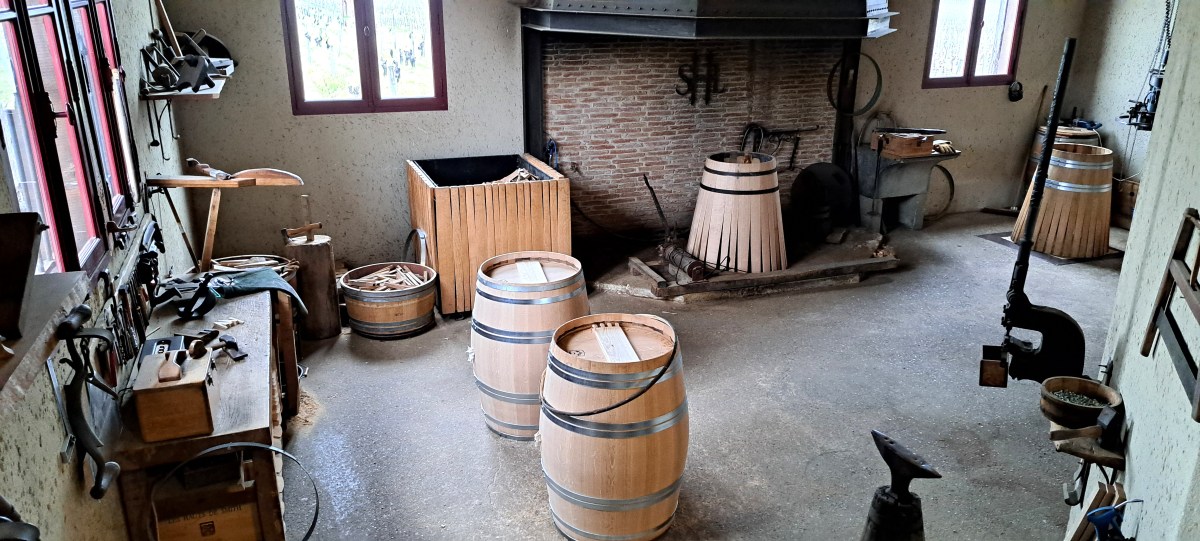
Smith Haut Lafitte is one of the few Bordeaux vineyards to produce their own barrels. French oak, naturally. During a visit here you’ll get a glimpse into the barrel-making room and perhaps see these craftsmen at work. Your guide will explain the fundamentals but be sure to ask questions as this is an important step in any Bordeaux education. What does oak do to enhance or modify the taste of these wines? What is its role in aging potential of certain wines? Why, in fact, do some wines have aging potential or require aging and others not? What does it mean to “toast” the inside of a barrel and how do various states of toastiness affect wine as it ages? How might it affect tannins, acidity and eventually pairings with food? Can we non-professionals sense that in the glass?
Come for the barrels, stay for the wine. As high-end wine drinkers well know, not all of the wine produced by an estate holding First Growth or, in this case, Graves Great Growth status will be categorized as such. Notable second growth, third growth and in any case lesser-than-Great-Growth wines will be labeled differently, such as Petit Smith Haut Lafitte or Les Hauts de Smith here, which may retail for under 50€ in France, compared with 150-300€ and much more for their older Great Growth vintages.
Whatever estates you visit, two vineyards in and you’ll already gain a sense of the dark fruit taste of the younger wines, a sense of what that likeable, drinkable term “roundness” means, and what your guide is talking about when he or she speaks of the mildly peppery and smokey tastes with vintages several years further along. Beyond the drinking pleasure, which comes first, home cooks will begin asking their guide and themselves what one fine wine or another might be paired with. Would I prefer this white before dinner or with the meal? Do I really want to buy a case that I need to keep in the cellar for 15 years before drinking, or better to select a second growth intended to be opened earlier?
So many questions to ask. So many places to learn the answers along the way. So many good and great wines.
The Cathiard family also owns the nearby Château Le Thil, an estate that produces a 95% merlot, 5% cabernet franc blend.
For further details see the website of Château Smith Haut Lafitte.
3. Chateau Couhins
Where researchers make fine wines and where climate change leads to innovation.
AOC Pessac-Léognan. Grand Cru Classé de Graves for white.
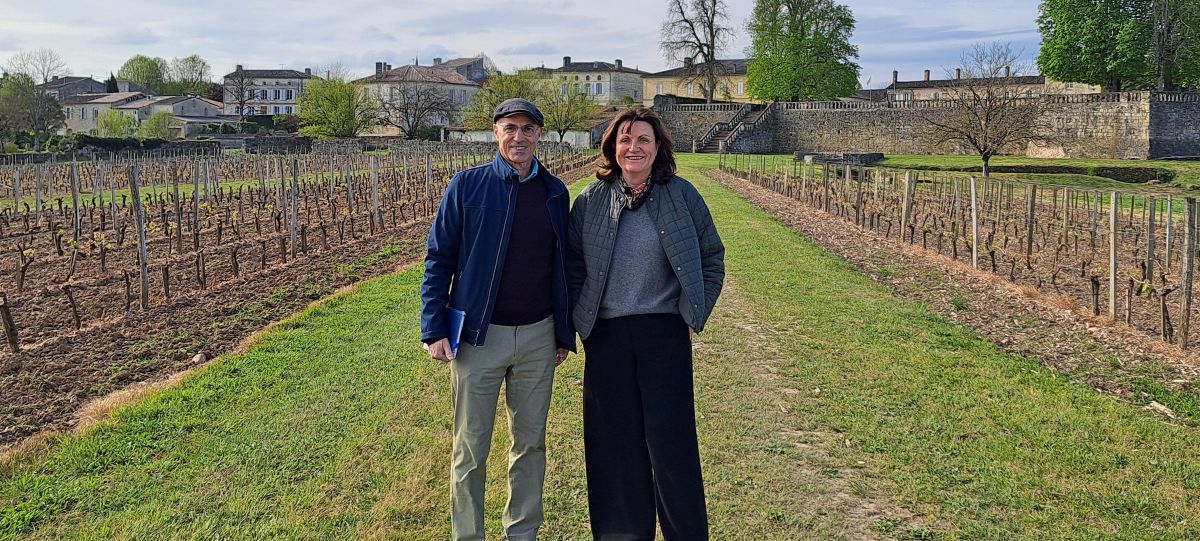
In addition to “oak aging,” you’ll often encounter while wine touring terms such as “lees aging” (in which the wine remains in contact with lees, which are the dead yeast cells after fermentation) and “batonnage” (stirring those lees), and perhaps understand why they matter to the cellar master. Things can then get even more serious and studious if you stop at Château Couhins. They don’t have to, though, since Couhins is also a top-flight stop for white Graves tasting, even without the studiousness. Yet for the truly curious or venturesome wine traveler, Couhins is an exceptional oddity in Graves territory because of its emphasis on scientific research and the environment.
The estate belongs to INRAE, France’s National Research Institute for Agriculture, Food and Environment. As such, it is the wine chateau with the least commercial approach when visiting. It is a place for an education not just in Graves or Bordeaux but in wine overall. While the wine tour here is accessible to all, it is also the place to come with questions about the science behind winemaking, about the relationship between grape and terroir, about the effects of climate change, and about ongoing innovative research in the vineyard and in the winery. Inquire, for example, as to why some estates have begun fermenting and/or aging a portion of their production in clay containers called amphorae or in clay or concrete egg vessels.
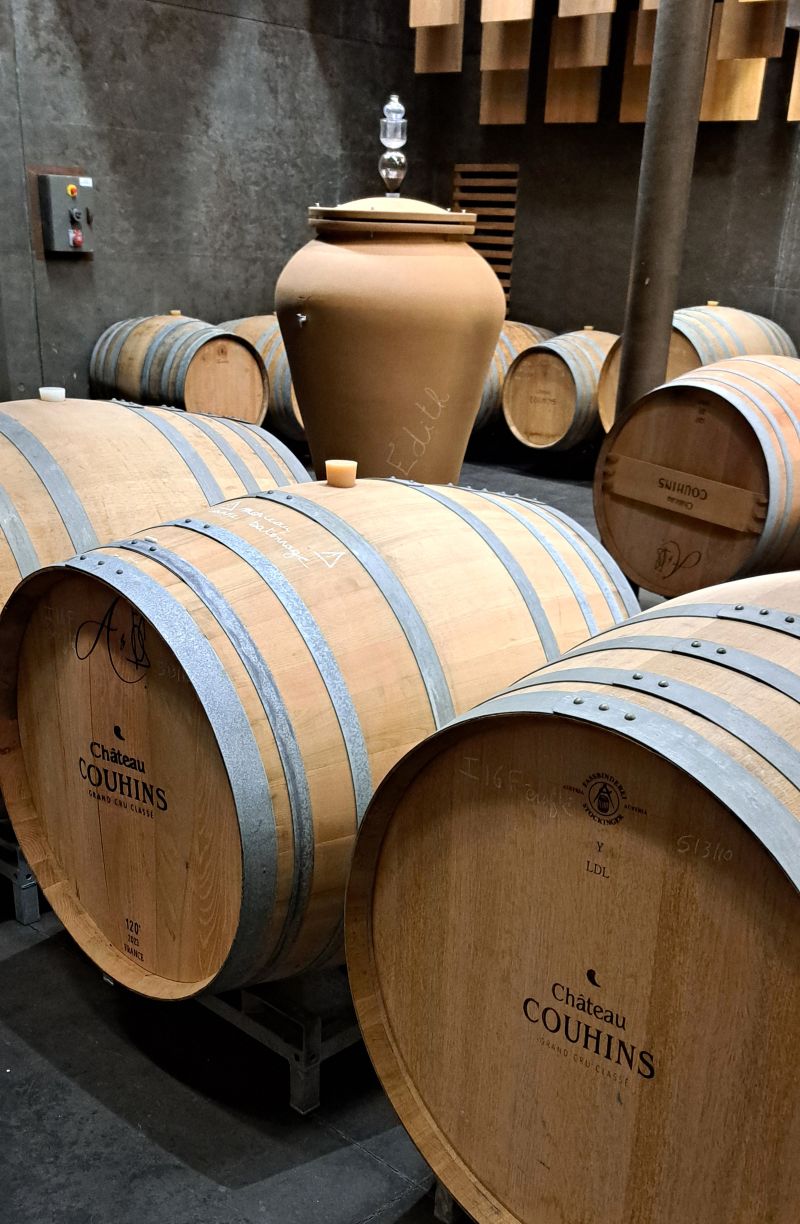
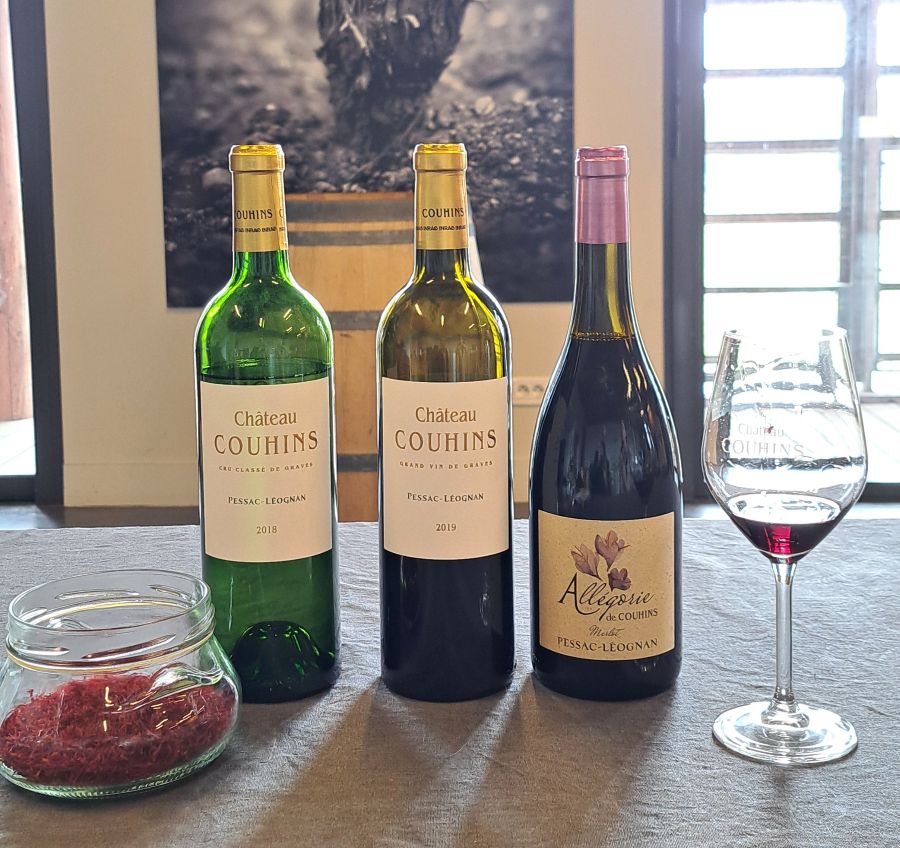
Couhins’ 74 acres of vineyard are planted two-thirds red, one-third white, primarily sauvignon blanc. The estate’s Graves Great Growth status for white explains that relatively large portion of white. Among the tasting offerings, the one called “Exceptional White Wines” is therefore the way to go. (I also tried some innovative reds and particularly enjoyed a smooth amphora-stored merlot.)
Even when some of the explanation was beyond my paygrade, I felt smart just listening to my science-minded guide. I learned that five acres of these vineyards have saffron growing between the vines. Don’t ask me what the saffron plants do for biodiversity in a vineyard because I don’t remember. But do ask me how I liked the saffron-infused sauvignon blanc jelly made here and I’ll tell you I wish I’d brought more home with me.
Travelers touring the region might not want to make this their only Graves/Pessac-Leognan stop, but it’s a choice place to hear about wine from a non-branded point of view, and especially about the role of the changing environment and innovation in wine today and for the years to come. You won’t feel that it’s marketing at all when a high-level researcher tells you, as he told me, that “the 2025 Graves whites are going to be exceptional.”
For more about this research estate’s history and the different types of tasting tours available, see the website of Château Couhins.
4. Chateau Haut-Bailly
An exquisite educational experience in the winery, at the tasting counter, and over lunch. Luxury lodging available.
AOC Pessac-Léognan. Grand Cru Classé de Graves for red.
During my tour in the region, the most luxurious educational experience that I took part in was at Château Haut-Bailly, which is designated as Graves Great Growth for red. The estate was purchased by Robert Wilmers, an American banker, in 1998, and still belongs to the Wilmers family following his death in 2017.
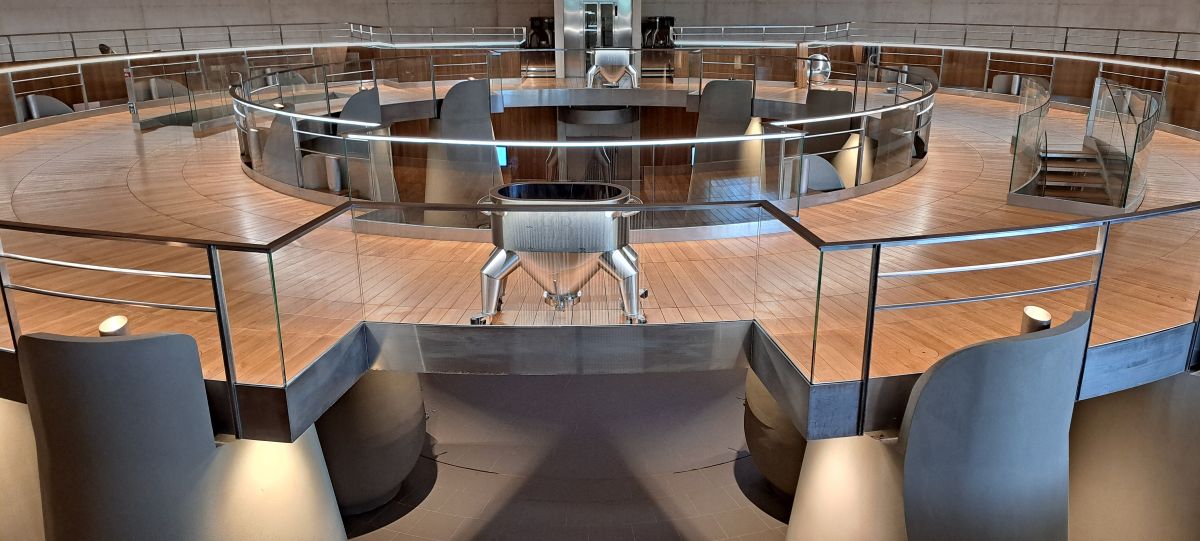
It’s an elegant place whose winery is an architect’s delight for its stylish environment- friendly functionality. The building was designed by Daniel Roméo, who is well known in the creation of contemporary wineries in the Bordeaux and Burgundy regions. It’s built in the round and covered by greenery so as to appear as a hill overlooking a portion of the Haut-Bailly vineyards. The top of that winery hill looks out to a 10-acre parcel containing some vine that were planted as far back as 1905, majority cabernet sauvignon, while the parcel also include five other varietals, many of old vines.
It isn’t for that stylish winery alone that a visit to Haut-Bailly is top of the line as far as Graves wine touring experiences go. On a private tour (reserved well in advance), the presentation is adapted to the visitor’s knowledge, whether you’re a novice, an experienced amateur or a professional. The estate’s 90-minute “Grand Cru visit” (75€) will be an instructive, eye-pleasing, palate-pleasing step in anyone’s Bordeaux (specifically Graves) education. Or take that up a notch with a tasting of 5 wines inside the chateau (110€).
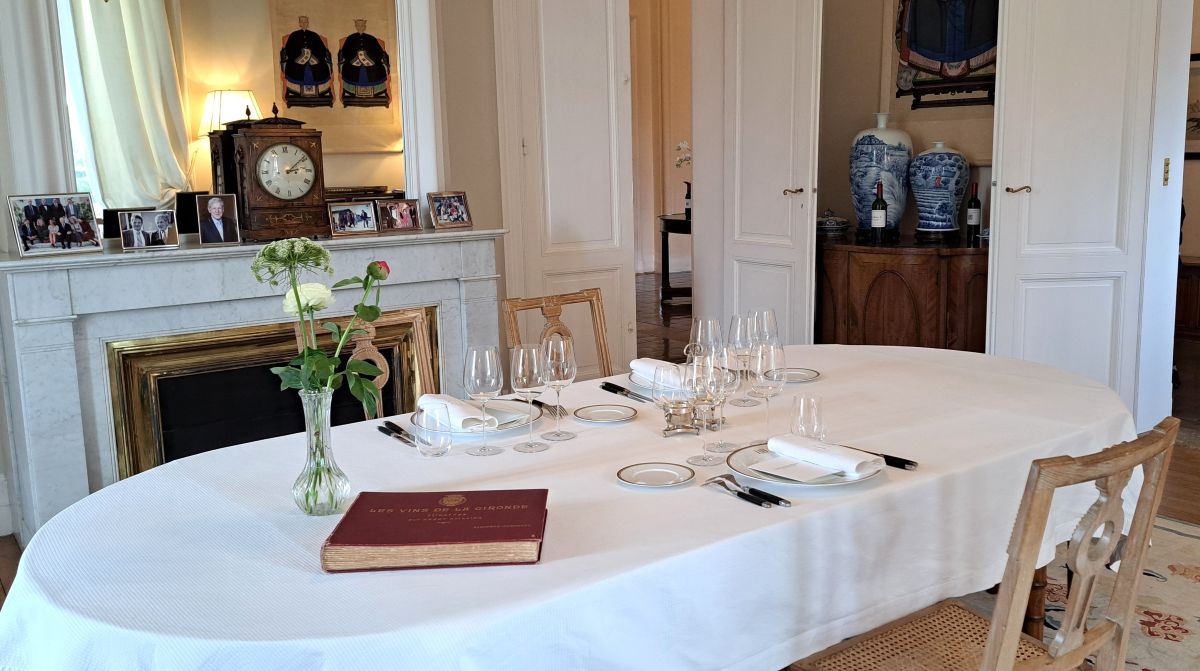
For a group of four or more well-heeled travelers looking to more fully get into the Grand Cru spirit, a winery visit can be extended with a private lunch or dinner paired with three or five wines in the company of a knowledgeable Haut-Bailly guide (185-295€ per person for a group of four or more). My own exquisitely educational lunch experience consisted of a gastronomic meal paired with two vintages of their first wine and one of their second. If considering this as a dinner wine adventure, you might want to stay for the night in one of their refined guest rooms.
A Graves Great Growth’s first red wine may be crafted to peak in 15 years or more, though you needn’t wait until the specialists say “Open.” Nevertheless, prolonged cellar time isn’t for everyone. So even on a luxuriant private visit such as this, don’t automatically order cases of the first wines if you aren’t willing to wait. Your investment in a Graves education can pay off handsomely by focusing attention on the estate’s second (Haut Bailly II) or third (HB) wines. But don’t take my word for it. Ask and taste with the experts. That’s why you’ve come.
For details about wine touring possibilities, see the webside of Château Haut-Bailly.
5. Château Haut-Brion
A supreme place in the history of Graves wines.
AOC Pessac-Léognan. Grand Cru Classé de Graves for red and white
Haut-Brion holds a supreme place in the history of Graves wines. Though it is the only château on this list that I did not visit, I would remiss if I didn’t mention this most famous estate in Graves.
Located just west of the Bordeaux in the commune of Pessac, Haut-Brion was the only Graves wine chateau to be designated as Premier Grand Cru Classé (Classified First Growth) in the legendary 1855 Classification. That list of Bordeaux wines was created at the request of Emperor Napoleon III, who wished to rank Bordeaux wines and promote the best of the best to the millions of international visitors coming to Paris on the occasion of the 1855 Paris Exhibition. The list focused on wines of Bordeaux’ Medoc sub-region, with Haut-Brion in Graves and Château Yquem in Sauternes as the elite first-growth outsiders.
A century later, Haut-Brion was naturally included in the Graves Great Growth Classification. By then the estate had been purchased (in 1935) by the American banker Charles Dillon. It still belongs to his descendants and is currently led by Prince Robert of Luxembourg, which sounds substantially more aristocratic than Charles Dillon, which sounds like the name of a sheriff or outlaw in an American western.

Haut-Brion’s reputation was international long before creation of the 1855 Classification. In 1787, Thomas Jefferson, while ambassador of the United States to France, toured the region to deepen his own Bordeaux and agricultural education as part of a wider European tour. After a fruitful stop at Château Yquem in Sauternes, he visited the Graves territory covered in this article, mostly notably visiting Haut-Brion. He also visited Château Carbonnieux (now also a Graves Great Growth) and Château Pontac (now called Château Pontac Monplaisir). Jefferson came away from Sauternes and Graves with high impressions of these wines and orders for numerous cases for his sophisticated cellar at Monticello, before continuing on to Château Margaux in Medoc.
Visits to Haut Brion are possible via the nearby Château La Mission Haut-Brion, a prestigious former rival which was acquired by the Dillon family in 1983. They naturally require an advance reservation and bear a price tag in keeping with Haut-Brion’s unique stature in the region. The Dillon family also has a Paris showcase for their wines and other high brands at La Cave du Château, near the Champs-Elysées. (Also read this 2019 impression of mine about a visit to the restaurant Le Clarence at that address.)
For further information see the website of Château Haut-Brion.
6. Chateau Larrivet Haut-Brion
Where one family presents their sense of “modern” Bordeaux wines.
AOC Pessac-Léognan.
From a 42-acre purchase in 1987, Philippe and Christine Gervoson have developed a relatively large estate with 150 acres of red grapes and 28 acres of white, now with the involvement of their three daughters. Philippe’s father, Jean Gervoson, was a founder of Andros, particularly known in the industry of transformed fruit products, which Americans may know through the Bon Maman brand of jams. (There is no relation between this estate and the previously mentioned Château Haut-Brion.)
Government agencies pay attention to data regarding alcohol consumption in France and try to interpret it for both the health risks associated with alcohol consumption and the economic and cultural roles of that consumption, particular regarding wine. It’s enough to read the heading of the page on alcohol on the government’s Public Health website: “Alcohol is deeply rooted in French culture. Its consumption remains a major cause of death and illness in France.”
Per capita wine consumption has decreased in France by over 60% since 1960. The complexities of the subject are not the subject of this article, but any wine education in France should include those statistics as part of the curriculum. You’ve undoubtedly read recent articles stating that young adults have been drinking less alcohol and in particular less wine. Last year, beer took over from wine last year as the alcohol most consumed in France, while overall alcohol consumption continues to decrease.
I mention that here not as a warning about Larrivet Haut-Brion but because the Gervoson family is particularly interested in presenting to wine tourists their sense of innovation in the field and in the winemaking process and explaining their sense of “modern” wines. That is not to say that the Pessac Léognan wines here are vastly different from others in the appellation. (In fact, “vastly” different would eliminate a winemaker from use of the current appellation.) All winegrowers are dealing with climate change and changing tastes and have a sense of their targeted markets, both in terms of place and demographics, including young adults. My point is that seeing how one producer deals with it from a production and marketing point of view and tasting their efforts is worthwhile for a Bordeaux education.
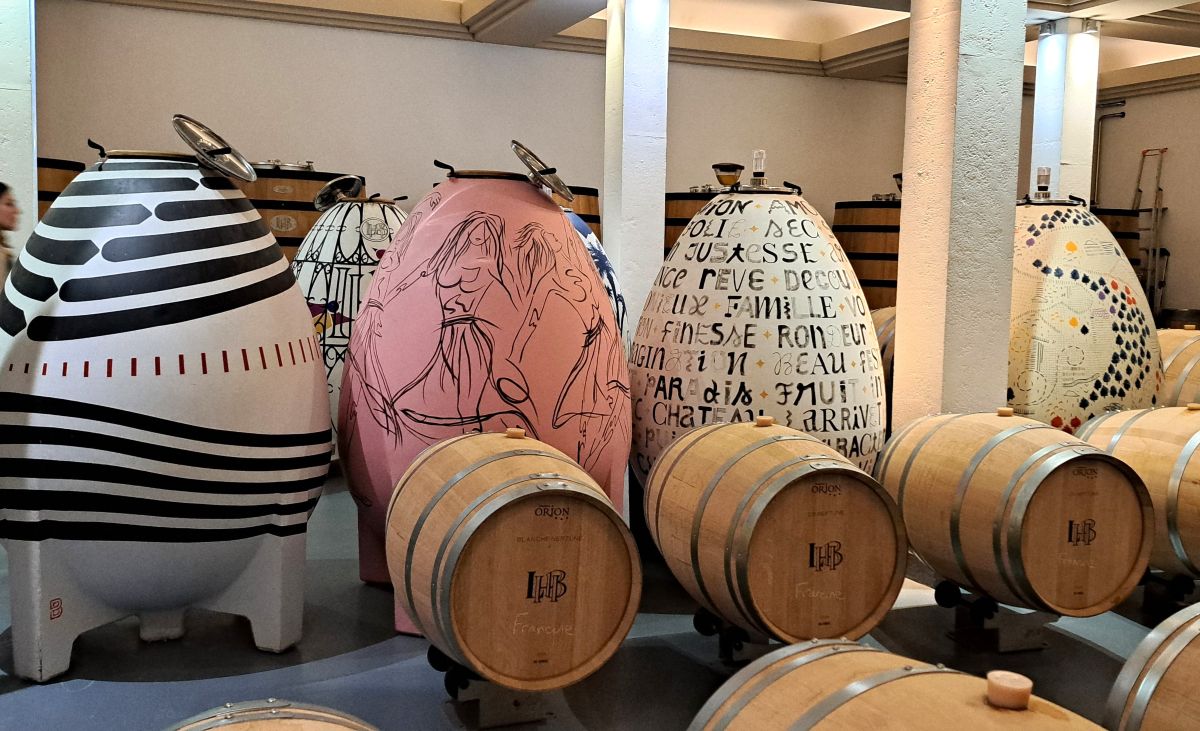
Vinification and aging can take place in various types and sizes of container, whether stainless steel, concrete, in amphoras, in concrete eggs, in oak barrels. You may have learned that already, for example at Château Couhins. Now here’s an opportunity to further grasp the interest and advantages or disadvantages of each for each of these on different styles of wine.
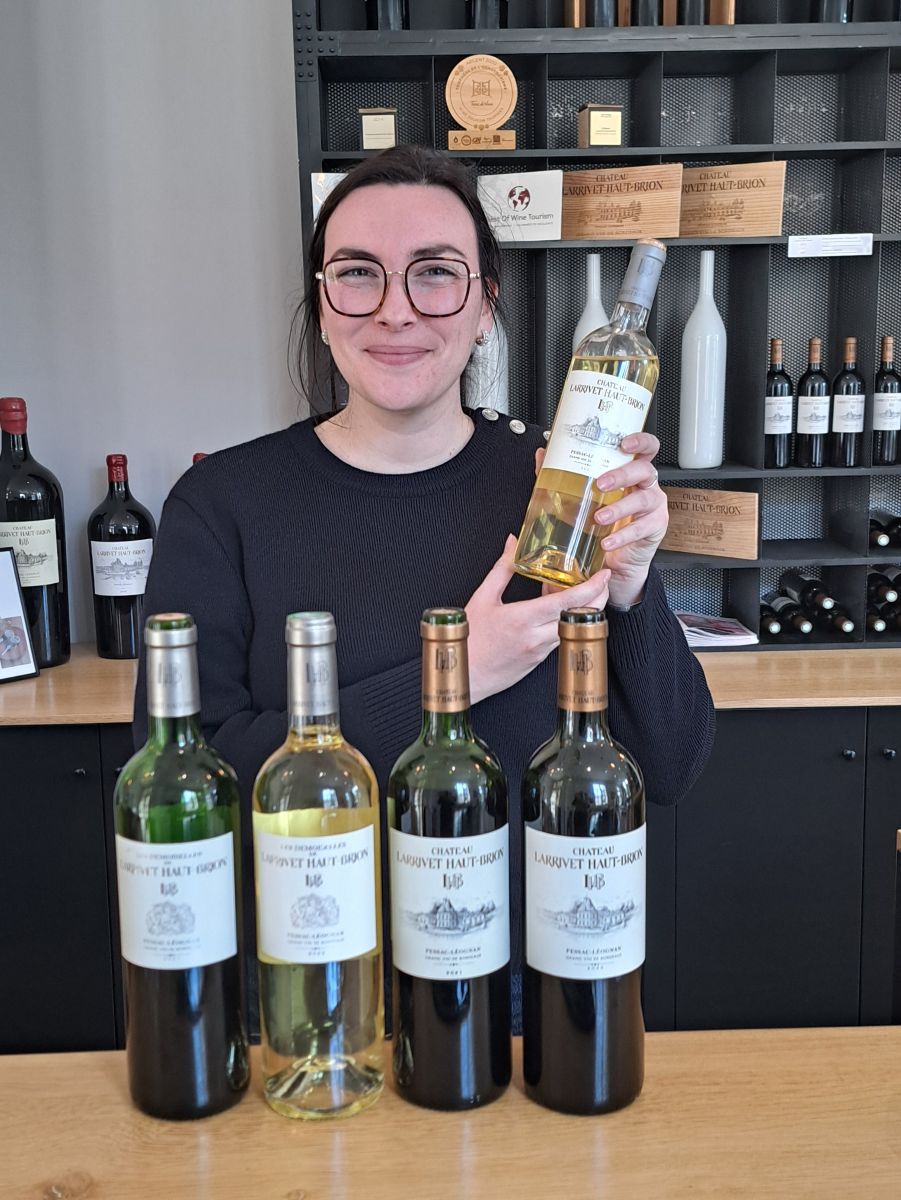
Inviting artist students to decorate the estate’s egg-shaped containers is a form of marketing and local collaboration that doesn’t affect the taste of the wine, but the result is indeed appealing to the visitor’s eye. That, in turn, leads to curiosity about the use of the egg containers in the first place. As to the resulting wine? Ask and try (if you’re fortunate enough, with a tasting conducted by Chloé Garreau, pictured above.)
Larrivet Haut-Brion received a 2027 Best of Wine Tourism Award in the category of Sustainable Wine Tourism for a friendly and informative tour called Vignoble du Future (Vineyard of the Future), which examines the role of biodiversity and innovation in winemaking in the years to come. A visit to the winery can include one of several wine pairing experiences for those interested in practicing their newly acquired Pessac-Léognan palate as it reacts with chocolate, cheese or caviar.
For further information, see the website of Château Larrivet Haut-Brion.
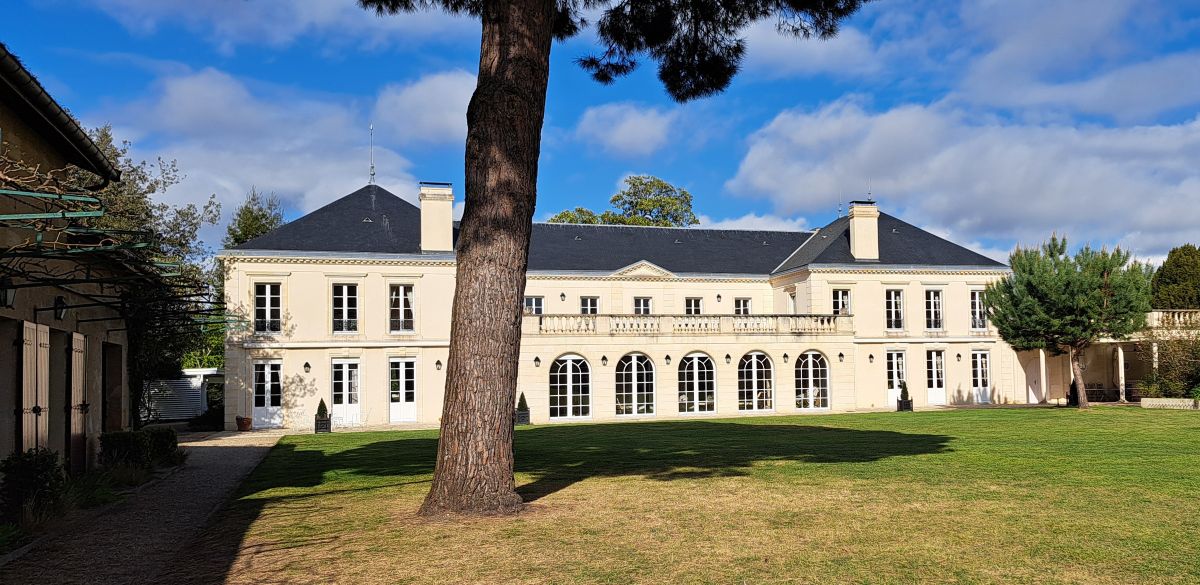
7. Château Malartic Lagravière
Beyond fine wine tasting or pairing, consider a chic lunch on the estate or a lunchtime cooking class.
AOC Pessac-Léognan. Grand Cru Classé de Graves for red and white.
By now you’re well aware that Grand Cru Classé de Graves is a sign of excellence within its class. That goes for both red and white at this estate. You’re therefore certain to have a fine dégustation here, whether you keep it simple with a visit to the winery followed by a tasting of two wines, or add a little cheese to further exercise to your palate, as I did (see photo), or perhaps a more extensive cheese workshop with three wines, or a prestige tasting of five wines (115€).
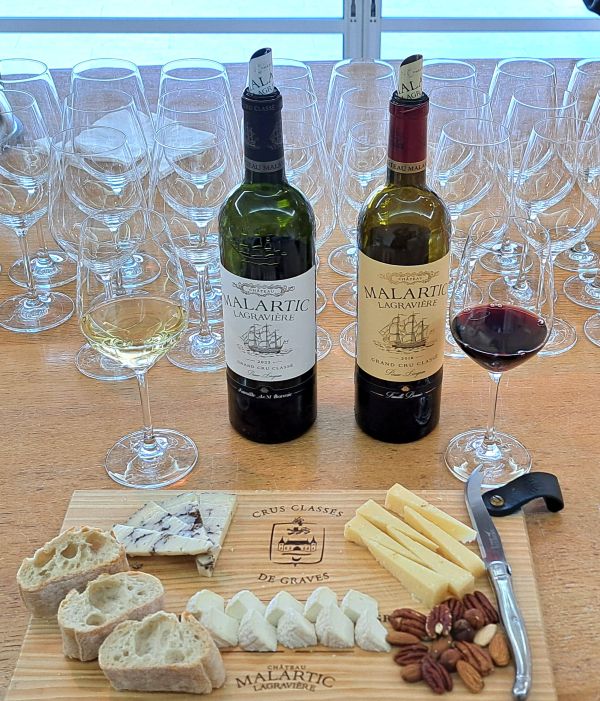
While in tasting rooms, don’t you sometimes get to wondering what it’s like to actually sit down with friends to share these wines over a meal? I do. How will my next social gathering be enhanced by serving a red wine made from prime grapes that has been aged in an oak barrel for 18 to 20 months and what would I serve with it? Or a white oak aged for 12 to 14 months? One way to find out is to create that social setting with an actual meal at the wine estate itself? You can do that here at Château Malartic-Lagravière.
As you’ve seen, paired tastings are found at many wineries in the region. Some propose lunch as well, whether a picnic or a table meal of varying grace. All of those are possible here as well, including lunch at the chateau (149€/person). Particularly original and noteworthy is Malartic-Lagravière’s offering of a visit that includes a lunchtime cooking class, with the created meal then enjoyed along with the estate’s wines, for your private travel party of 2 to 12 people (195€/person). This takes place inside the property owner’s residence at the back of the property. It’s an elegant, lived-in setting in which your teaching chef will help create own delicious and thoughtfully paired meal for you to then enjoy without the conversation being singularly focuse on wine, like at home.
For further information, see the website of Château Malartic-Lagravière.
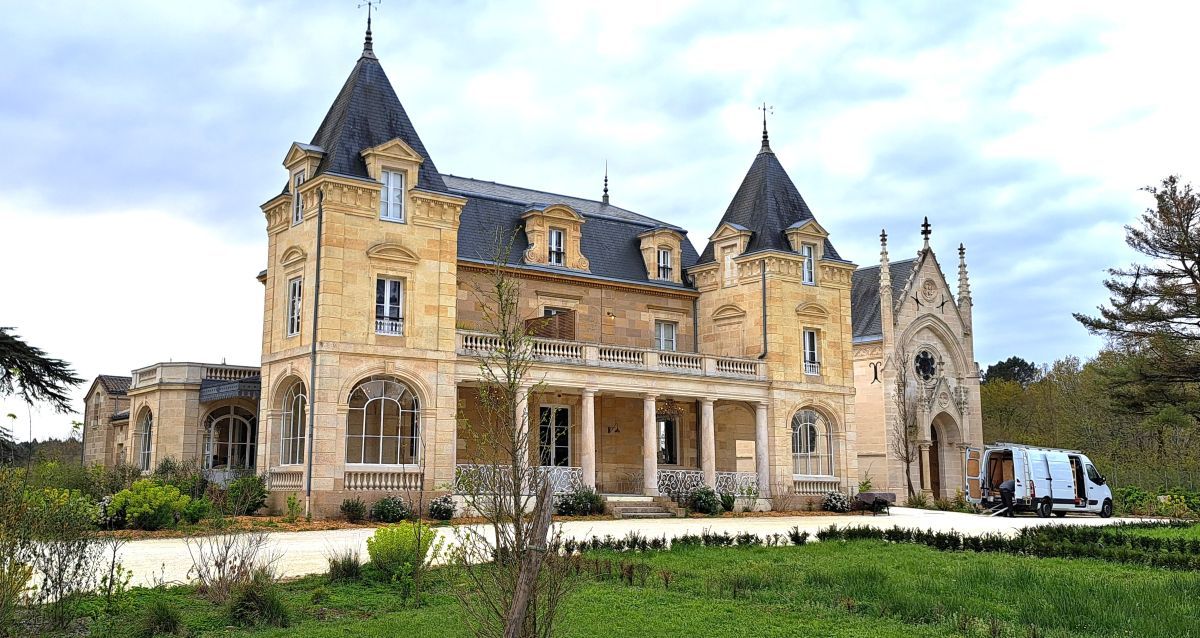
8. Château Léognan
A brief tasting followed by a pleasant meal and a 5-star night’s sleep.
AOC Pessac-Léognan.
Touristic development in any winegrowing region leads to the creation of hotels near or associated with vineyards. Within the Pessac-Léognan growing zone, Château Léognan is a pleasing place to wine down for the evening and to bed down for the night. Smith Haut Lafitte, Couhins, Haut Bailly, Larrivet Haut Brion, Malartic Lagraviere, and others, are all within 5 miles of here, making Château Léognan a nice base from which to explore them, even if just on an overnight.
Though you’ll reserve your in-depth touring of vineyards and wineries elsewhere, here you can enjoy a tasting of Léognan wines from the estate’s 15 acres of vineyard then settle in for the evening, with dinner at the property’s restaurant Le Manège and 5-star lodging.
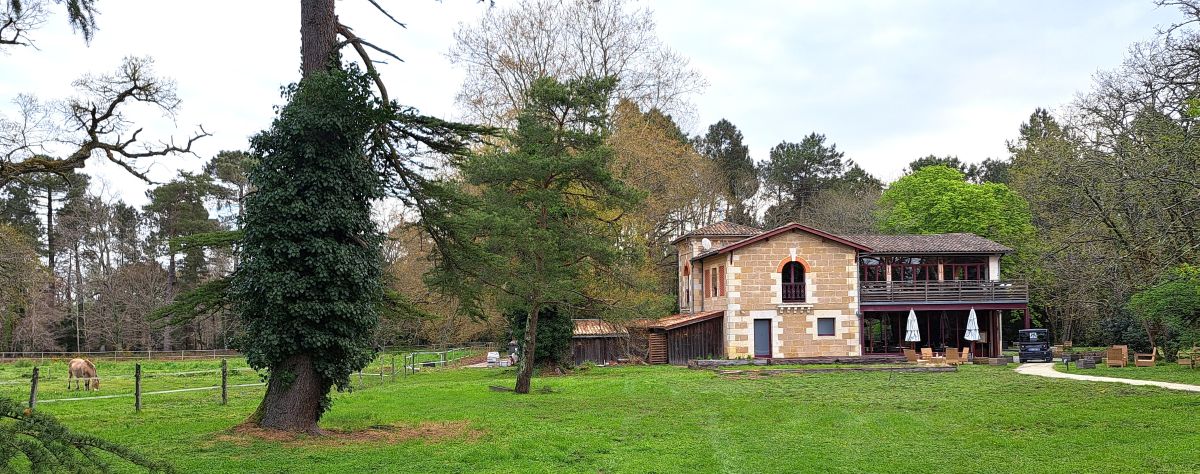
Given the serious lunch I’d had at Haut-Bailly as mentioned above, I kept it simple with a cheese and charcuterie platter for dinner. Hungrier travelers can opt for a traditional meal with options such as chicken supreme, poached cod and beef tenderloin. The hotel opened in 2023 with a “lived-in” décor in a 19th-century mansion. Wine touring is naturally the main activity in the area, but other available activities (biking, croquet, hiking, spa treatments, a visit to the property’s restored chapel) make Château Léognan equally attractive for families, a group of friends, and couples with romance in mind. And yes, you can visit all these vineyards I’ve described with children.
For further information about the hotel and the estate’s wines, see the website of Château Léognan.
9. Château Jouvente
Personable attention and delightful pairing at a small family estate near Sauternes. Also has a showroom in Paris.
AOC Graves.
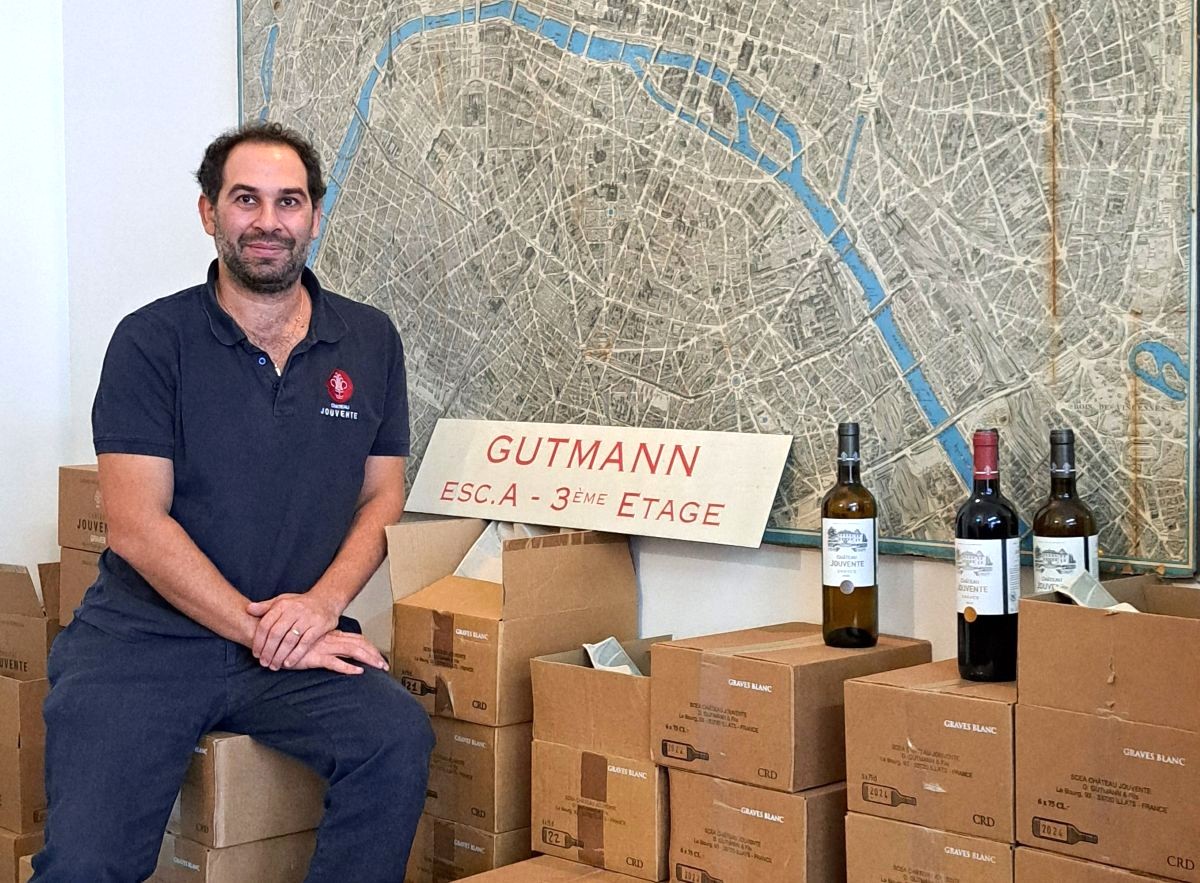
Deeper into Graves territory, just before Sauternes (subject of the next article), I arrived at a rustic-looking estate of 23 acres of vineyard on the edge of the village of Illats. Château Jouvente was purchased by David Gutmann as a family venture (and adventure) in 2016 and is managed by Benjamin, one of his three sons. As Benjamin told me, his father, who runs an international consulting firm, had since the 1970s had an interest in wine and a dream of owning a vineyard, not only for the wine but also as a family gathering place in the Bordeaux region. Arriving from outside of the wine industry, the family naturally needed to lean on local expertise in the vineyard and in the winery. To get started, that continuity of experience was ensured at Jouvente by Olivier Bernadet, who had been taking care of wine production—from vine to vinification to bottling—here since 1995. (Olivier also owns a small Sauternes vineyard himself.) Jouvente wines have evolved over the past ten years under the leadership of Benjamin Gutmann, still with Olivier as the technical manager. Olivier’s son Antoine also now works with the estate as its manager of wine tourism. Family, as I’ve said, is important here.
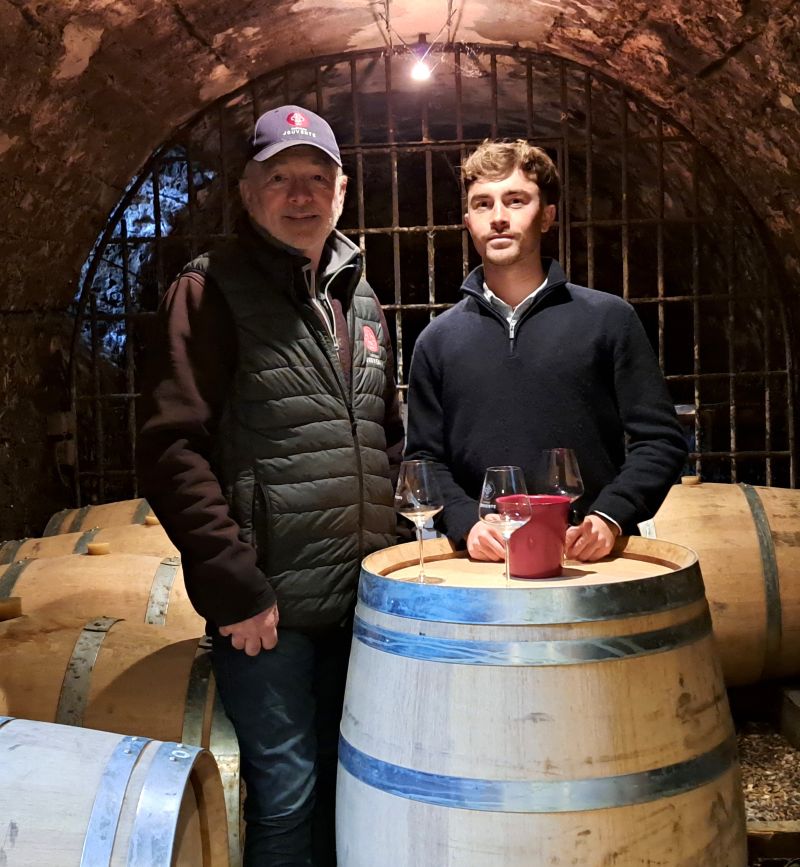
Visiting a small family winery has two advantages from the get-go. First, the person giving the tour will either be a member of the immediate family or someone deeply involved in the winemaking process. Second, that person is able to adapt his explanation in such a way so as to be informative to novice, experienced amateur and professional alike. (Visiting a large producer, one sometimes gets the impression that the guide has a set speech to make that doesn’t take into accountant what you, the visitor, bring to the table.) Among its range, Jouvente’s outstanding white and red retail for 17-24€ in France. Since 2023, Jouvente has also produced kosher whites Graves whites and reds.
Given Jouvente’s modest size and its location further afield from those mentioned above (though we’re still only 23 miles from the Bordeaux city center), there is a less touristy feel to the visit. In educational terms, it feels less like a classroom and more like an after-school adventure. Jouvente’s winery visit and tastings provide homey lessons in different methods of aging wines before bottling. You might taste from the barrel in a storage room that once served as a prison.
A 15€ visit and tasting of six wines includes a Sauternes from Château Roumieu (Olivier’s vineyard), just two miles away. Or perhaps select a paired tasting. After Olivier led me through the wine-making process, Antoine guided me through a wine and caviar pairing. Other estates also off a wine and caviar pairing—not because everyone in the region enjoys a daily spoons caviar on their bread or potatoes or at the base of the back of their thumb, but because New Aquitaine, the greater region with Bordeaux at its center, is historically a prime area for sturgeon farming in France. Jouvente pairs their wines with caviar from Caviar de Neuvic, based in the neighboring region of Dordogne. A caviar pairing naturally hikes up the cost of a tasting (180€ for 2 or 3 people). Perhaps Jouvente’s wine and sorbet tasting will be more to your liking. Still others will prefer staying solely focused on understanding the nuances of the wine. In any case, travel calls for a well-rounded wine education. A wine and caviar experience along the route of Graves, why not?
Whether or not you intend to explore Graves territory briefly, extensively or not at all, you can get a instructive taste of Graves, typically with Benjamin Gutmann himself, by visiting Chateau Jouvente’s showroom in Paris, in his grandparents’ former tannery workshop, near Place de la République.
For further information about this estate visit the website of Château Jouvente.
Endnote
A wine traveler interested in Graves will, with sufficient time, naturally next visit a Sauternes winery, just over the appellation border from Château Jouvente. In addition to the pleasures of those unique wines in the region, you’ll be particularly pleased to find that your hard-earned education in Graves whites now gives you a leg up in appreciated Sauternes country. That’s the next stop on my Bordeaux education.
© 2026, Gary Lee Kraut