

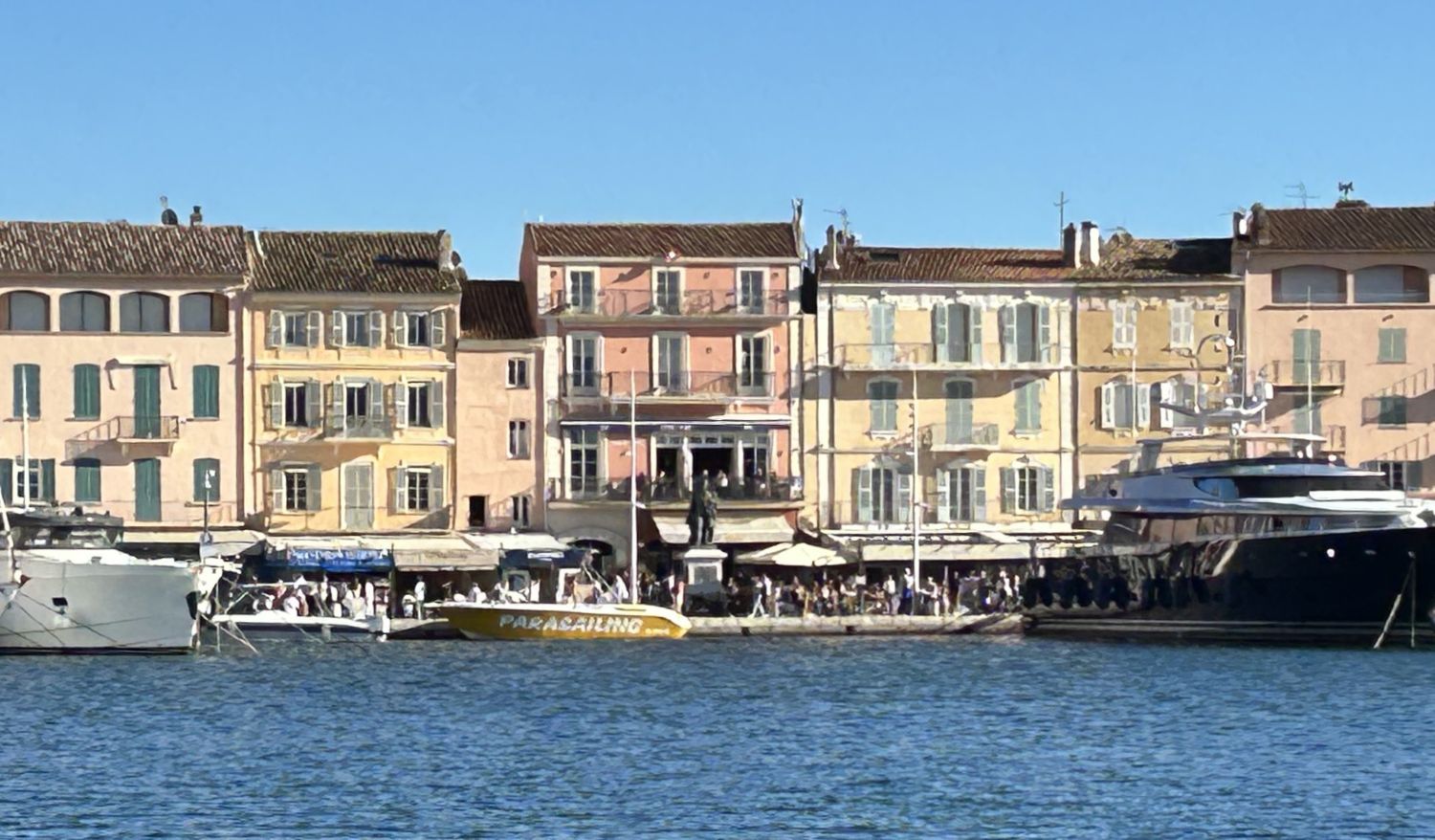
Catherine Sabino enjoys an off-season stay in Saint Tropez without the glitz and glare (but still plenty of yachts) as the celebrated Riviera town has shifted into lower gear but isn’t yet ready to pull down the curtain on summer. Photo above: Entering the port of Saint Tropez © Catherine Sabino.
For all my time spent in Europe, whether as a student, magazine editor or freelancer flitting from one country to the next, it was the Riviera coastline rather than the great culture capitals that lured me whenever I could slip away. Over the years I’ve been fortunate to spend countless hours (probably too many) at seaside towns and villages perched along the great Mare Nostrum, as the Romans called their Mediterranean. Or more precisely, its watery patchwork of seas, gulfs and bays that, for me, reached from the Lérins Islands, off the coast of Cannes, to Puglia’s tip-of-the-Italian heel, Santa Maria di Leuca. There were also a few detours to European Atlantic beaches, like Cascais and Estoril, along the way.
Despite the many years of coastal wanderings, I never had the chance to visit what’s often considered the archetypal Riviera resort, St. Tropez, a former fishing village that rocketed to fame close to 70 years ago thanks to the Bardot-Vadim movie And God Created Woman. I was eager to add it to my roster of sunny places where my time had been spent, perhaps not always productively but always quite happily so. And that was regardless of whether the destination was a tiny village that made me feel like the only non-resident in town (because I usually was) or an established coastal city where it was too easy to get lost among the tourist and cruise-ship crowds.
Many Mediterranean resorts, at least the ones I’ve been to, offer some version of la belle vie, which in spirit at least, give a nod to the enduring legend of St. Tropez. Starting in the 1950s, the town created a breezy template for a post-war mix of sophisticated yet casual glamour that persists to this day. What could I expect on this first trip? Would I encounter the classic Tropézien rhythms of beach-centric days punctuated by long lunches (and equally long dinners), and, for the most resolute fun-seekers, nightclub stints that usually wrapped up as the sun rose? Perhaps not in October, when I’d chosen to visit. Beach days would likely be numbered, but the temperatures were slated to be in the ’60s and low ’70s, and there were lots of sun icons on the weather apps. Would I come across a still-crowded town (October is the new June for astute travelers, right?) or a place ready to roll up the sidewalks for a nice long winter sleep?
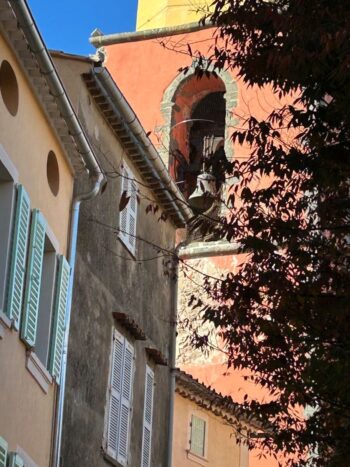
As one of Europe’s perennial high-wattage getaways, it’s not surprising that the “laissez les bons temps rouler” vibe seemed to begin as soon as I entered the town. The first shop I noticed on the drive in from Nice was a cave à vin with a promotion for the posh sparkler Dom Pérignon in the window. With that initial retail shout-out, I wondered if I would be met with unbridled revelry when I headed into town that evening. But no, I came across something far more appealing. The harbor area, the enduring epicenter of St. Tropez, was busy, but not overwhelmingly so, reflecting a town that had shifted into lower gear, but was not ready to pull down the curtain on summer.
There was just enough bustle, too, at the restaurant where I had dinner, Marcellino, on Quai Jean-Jaurès, which was so close to the harbor you could wave to the yachties on the boats a few meters away. The food here was Mediterranean/Provençal with strong Italian influences, a not uncommon combo in St. Tropez as I would soon learn. The ties between the two regions date to the 15th century when families from Genoa settled in the area and fortified the town. St. Tropez’s flag took its red-and-white colors from the Republic of Genoa’s standard. The town’s name came from its patron saint, St. Torpes, who was from another Italian maritime heavyweight, Pisa.
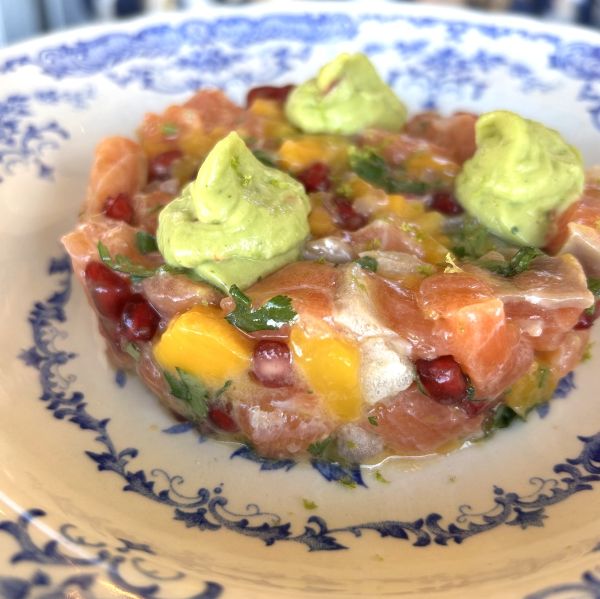
In St. Tropez, you’ll find a lot of Italy. For someone who is part Italian, this made me feel at home a little faster than I usually do in French destinations, excepting Menton, where I’d hop across the border for a swim and spaghetti alle vongole in Balzi Rossi. La Ponche, the Old Town and St. Tropez’s former fishing quarter, could be cloned from an ancient hamlet in Liguria. It follows a centuries-old blueprint—a compact district with stone houses drenched in sun-faded peach and lemon tones, narrow winding streets (called caruggi in Liguria, ruelles here), and a Baroque-style church, Église Notre-Dame de l’Assomption. If you feel like you’re in a maze as you walk through La Ponche, that was once the point: to confuse any invaders storming in from the sea.
There are no worries about rogue corsairs popping out from behind a corner in La Ponche these days, only clusters of tourists, but at this time of year the area had mostly returned to its native rhythms. The nearby beaches, La Ponche and La Fontanette, were empty save for a few determined sunbathers and locals out for a morning walk. (You can swim in St.Tropez in October if you like seawater on the cool side. I don’t, but in the afternoons it was warm enough for a dip in the pool at my hotel, Villa Cosy.) As you walk through La Ponche near lunchtime, beware. As in Italy, it’s common to have your taste buds shift into high gear by whiffs of garlic drifting from the windows of home kitchens or from one of the few restaurants in La Ponche proper. Most bistros are located near the port.
The majority of shops are found outside La Ponche, too, along the streets reaching down to and near the harbor, where there are various local, artisan and luxury boutiques. These provide ample retail reminders that St.Tropez plays out in more than one key. (The top international brands cluster on the Rue François Sibilli and around the Place des Lices.) There were good, end-of-season discounts, but marked-down linen pieces seemed less urgent to buy in October than they might have in June.

One shop that’s a must, regardless of the season, is Rondini, which crafts the classic local takeaway, Tropéziennes, the flat-sole, strappy leather sandals made famous by Brigitte Bardot. This artisan atelier, which also makes a variety of leather products, was founded in 1927 by Dominique Rondini, and flourished well before the town’s jet-set era. (The writer, Colette, was an early client.) Alain Rondini, whom you can meet in the store, runs the business today, the third-generation family member to do so.
While fragrance is not an ancestral craft in St. Tropez, the town does lie in Provence, famous for its lavender fields and bounty of scented products. Olfactory branding is not uncommon at local beach clubs or in boutique hotels; you can even test your neophyte (or non-existent) perfumer skills at a fragrance workshop. I attended one by Maison S-T, trying to power my way, Nutty-Professor style, through what seemed like simple ingredient choices for a custom fragrance. But my selections needed a bit of “curation,” to describe my fumbles euphemistically, from one of the on-site fragrance pros, so I did end up with a scent that I was happy to take away with me. Unlike many travel purchases which seem so right in situ but like mistakes once you get home, my personally mixed floral fragrance has been one of my most practical souvenirs and has held up well over the last 11 months.
To get a sense of old St. Tropez you head to La Ponche, but to better understand the town’s fabled allure, you linger in Vieux Port. The transformation of the village’s humble old harbor into a mega-yacht haven followed a Riviera narrative that’s played out elsewhere along the French and Italian coasts, although here it was especially fueled by cinematic myth.
Once fishermen’s houses lay right on the water. Now these former maisons de pêcheurs sit back behind the quays that form the seaside promenade. But clusters of their old boats, les pointus, still bob in the harbor near the yachts and continue to be used by a handful of fishermen who ply their trade in the gulf. Along these waterfront quays you’ll come across such entrenched people-watching spots as Café Sénéquier, dating from the late 19th century. In earlier times you might have sipped a noisette alongside Matisse or Picasso, or during the 1950s with the Nouvelle Vague crowd.
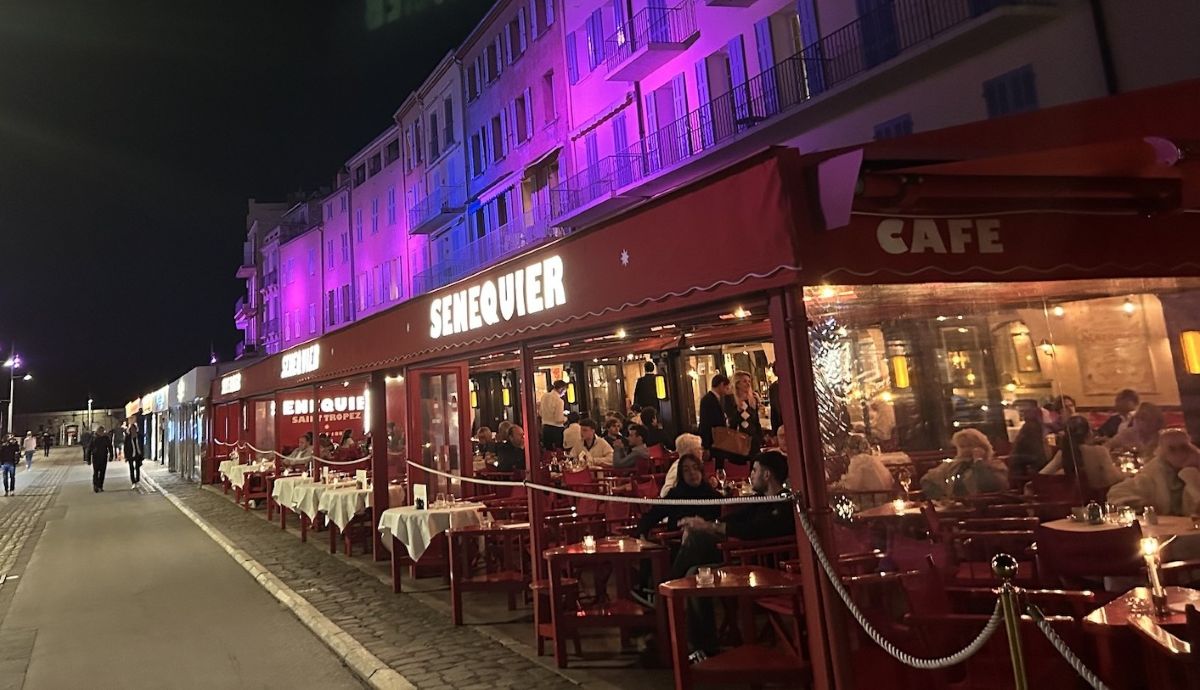
I saw no celebrities in October in St. Tropez, but there was plenty of activity in the marina, perhaps a holdover from the town’s early fall regatta, Les Voiles de Saint-Tropez. Or maybe it just came from the boat owners hoping to eke out a few last balmy days on the sea before winter hibernation. Even if you don’t own a boat, you can feel part of the harbor action if you dine quayside. At Bòu (which means fishing net in Provençal), a seafood spot at the western end of the promenade, you get up-close views of the yachting scene. The staff here seemed especially determined, with their unflagging good cheer, to make sure we were having a good time. Across St. Tropez the restaurant teams appear to be trained to do just that, and in off-season they have more time to indulge you. At Les Halles, a hopping food hub (with DJs and live music on weekends) at the other end of the harbor, there’s even a designated Happiness Manager to keep things lively. (See the official site of the Saint Tropez Tourist Office for information about events and festivities throughout the year.)
Most coastal towns deserve a look-at from the sea, a chance to take in the invaders’ view, so to speak, to get a sense of the long-ago isolation and vulnerability of these once remote settlements. Even with all the billionaires floating about, you can rent a charter reasonably, especially in shoulder season, or book a regularly scheduled tour on the Le Brigantin II, a family-owned excursion boat, to see St Tropez’s coast. A glide on the water typically takes you past such landmarks as the Citadel, a fortress built to ward off Spanish invaders, and Canoubiers Bay (aka Millionaires’ Bay) along the coast of Les Parcs de St. Tropez, a gated community for the very rich. The seaside terrain is gentler than at Cap d’Ail or Cinque Terre, so perhaps less dramatic, but the open expanses let you absorb the transcendent Tropézienne light that so mesmerized painters who came to the area. By October, it has been largely freed of its summer glare and intensity, just as St. Tropez has.
© 2026, Catherine Sabino.