
After several notable if haphazard Bordeaux wine experiences, I came to the conclusion that gaining an education about Bordeaux—the city, the region and the wines—would be an enjoyable personal project and a worthy professional one. Join me in this new series of articles as I go about obtaining a Bordeaux education.
* * *
I am a France travel and tour expert, not a wine specialist. Nevertheless, it’s important for me to have a good handle on the wines of the wine regions that I write or lecture or advise travelers about—not to mention that when I dine with visitors, they often hand me the wine list. If French wine were a language, I’d say that I was conversant but not fluent. Over the years I’ve learned how to conjugate the wines of Champagne, Burgundy, the Loire Valley, Burgundy, Beaujolais and the Rhone, and I’ve had the honor of being invited to sit as an “experienced amateur” on wine juries for Châteauneuf-du-Pape and Beaujolais. Yet, as many travelers say with respect to their grasp of a foreign language, I understand it better than I can speak. I am not a wine connoisseur, and that’s fine with me.
Still, it’s come to disturb me that my handle on the Bordeaux winegrowing region has lagged. I could explain my Bordeaux deficiency by saying that when I was first getting interested in French wines (in wines of any kind, actually) in the 1990s, the variety within the Bordeaux region confused me. Their love-‘em-hate-‘em, inaccessible-unreliable reputation that I heard about convinced me to look elsewhere and closer to home (Paris) for my wine education. Furthermore, as a novice travel writer then with a contract to write a guidebook to France, a tour of the sooty city of Bordeaux gave me little reason to return on what was then a relatively long train ride from Paris.
As the years went by, I spent more time visiting (then writing and lecturing and advising about) the Loire Valley, Champagne, Normandy, Burgundy, the Rhone Valley and Provence and thus encountering the wines (or in the case of Normandy the ciders and Calvados) produced there. Bordeaux got left by the wayside. I rarely even considered the Bordeaux options on a wine list. I didn’t feel that I needed Bordeaux.
But the more I was able to talk the talk when meeting wine professionals in those other regions and the more I was called upon to advise travelers about visiting wine regions in France, the more I realized that I’d been avoiding Bordeaux. As conversant as I’d become in the language of French wine regions, I’d failed to acquire one of the major tenses. Bordeaux had become my subjunctive. I couldn’t properly speak French wine or even non-wine touring in the Bordeaux region without having a better grasp of it.
Bordeaux, the city
Bordeaux, the city itself, wasn’t completely absent from my travel grammar. I’d visited several times since I first wrote about the city in the early 1990s. It would be another 15 years from that initial visit before enough of the dark veil of soot that covered La Belle Endormie (The Sleeping Beauty), as the city is known, had been lifted—enough to enjoy the stroll along the dignified golden-stone architecture of the orderly streets of the vast historic center, to admire the stunning crescent sweep of the Port of the Moon, to take note of the life in the wine bars, cafés and restaurants … and to want to return.
Thanks to the devotion to urban renewal by the powers that be, Bordeaux earned UNESCO recognition as a World Heritage Site in 2007 for constituting “an exceptional testimony to the exchange of human values over more than two thousand years” and representing “an outstanding urban and architectural ensemble.” With each visit, I found the city center more revitalized. Maintaining its momentum, the city opened the Cité du Vin, the center for wine and wine culture, which I visited soon after it opened in 2016. Meanwhile, the trains heading southwest from Paris have sped up; Bordeaux is now just over two hours away on the quickest route, putting it in nearly day-trip reach of the capital.
Bordeaux, the wines
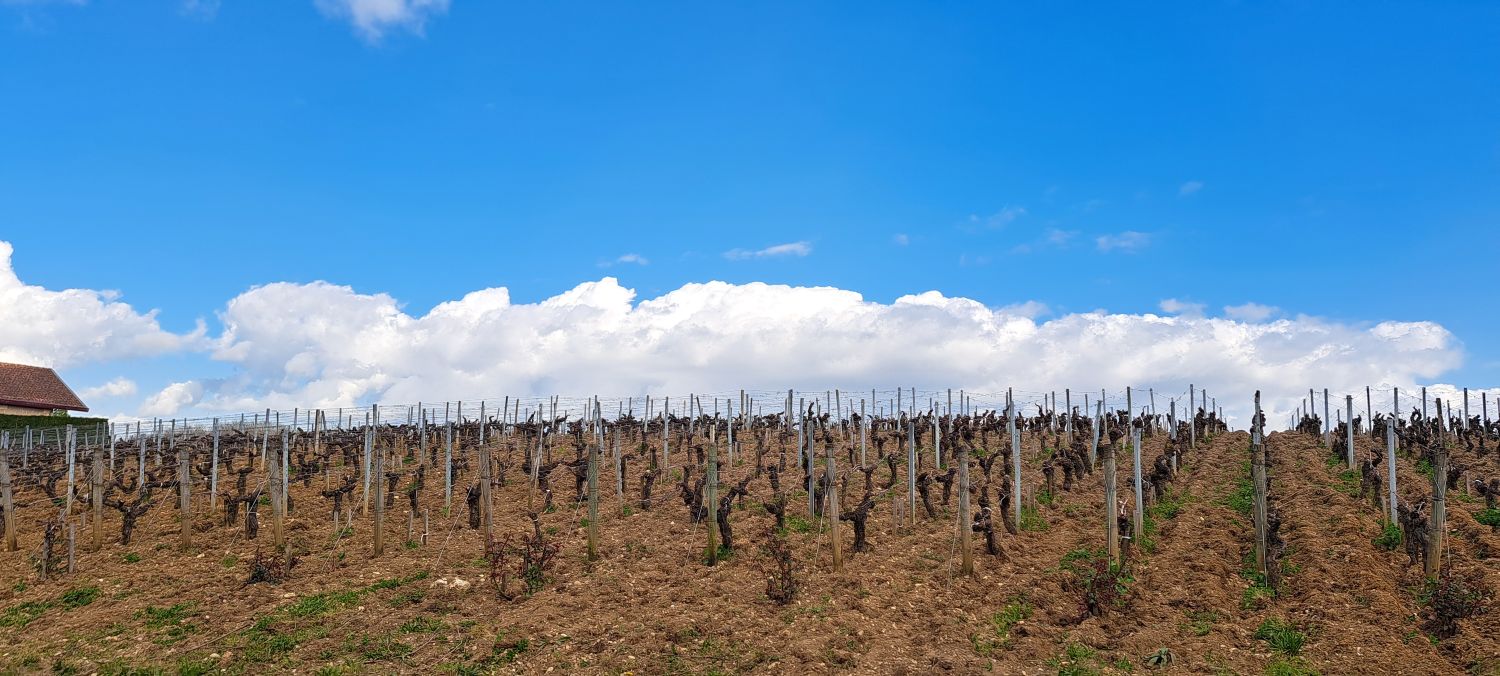
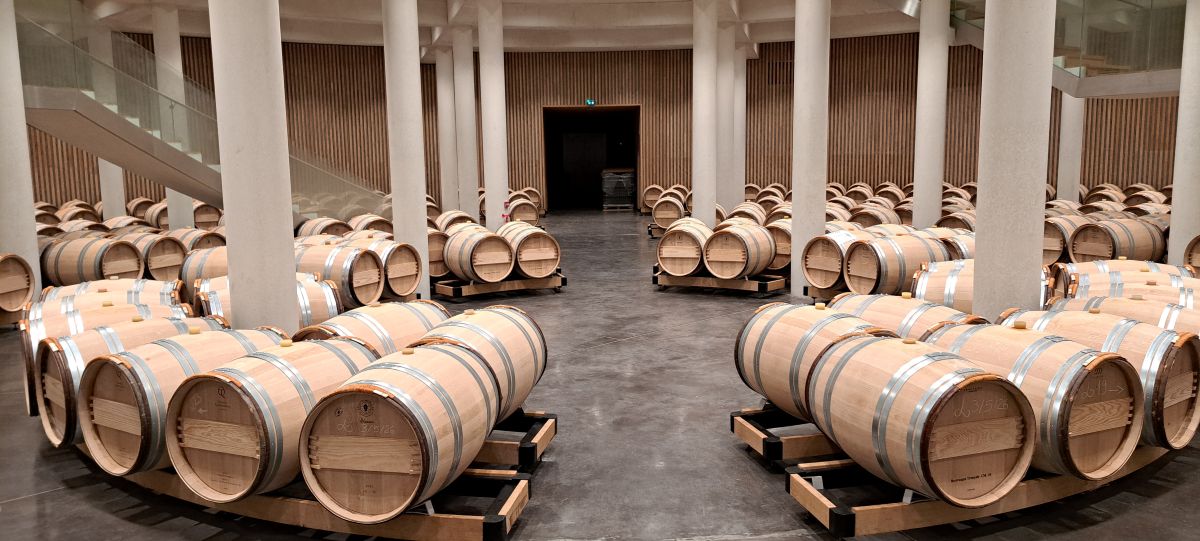
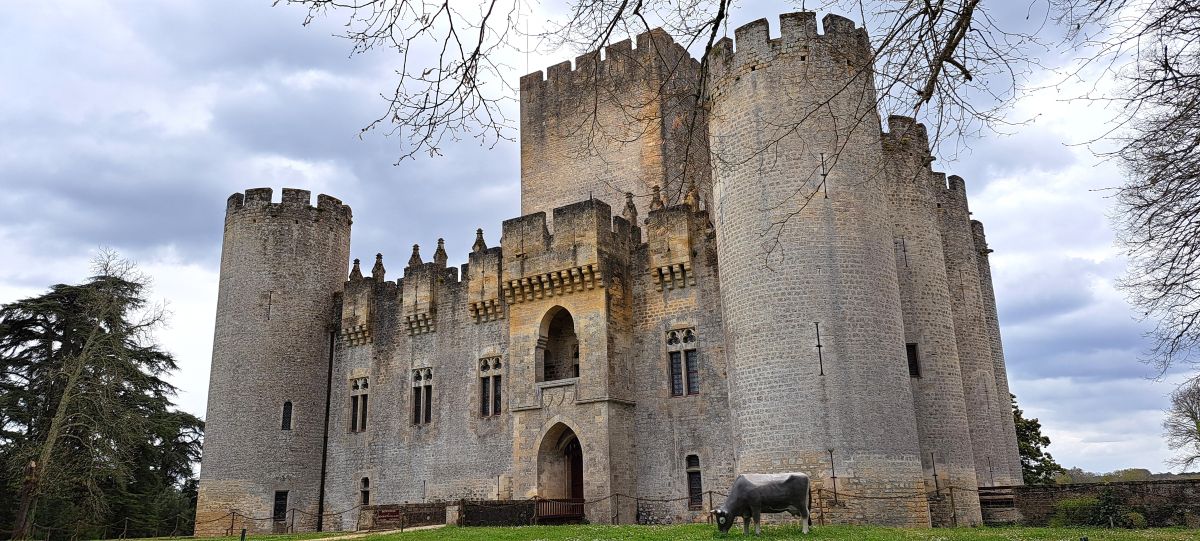
Bordeaux wasn’t completely absent from my wine grammar either. I once took (and wrote about) a joyful walk in the vineyards of Rauzan in Bordeaux’s Entre-Deux-Mers winegrowing zone. I’ve also checked out the charms of Saint-Emilion, with a few tastings while there. And I’ve kept abreast of the growth of wine touring in the region (biking, cruise excursions, luxury hotels). But getting a handle on travel and wine in the Bordeaux winegrowing region as a whole in order to “speak” it the way I do so many other regions requires much more. Especially, it requires some focus.
Initial steps
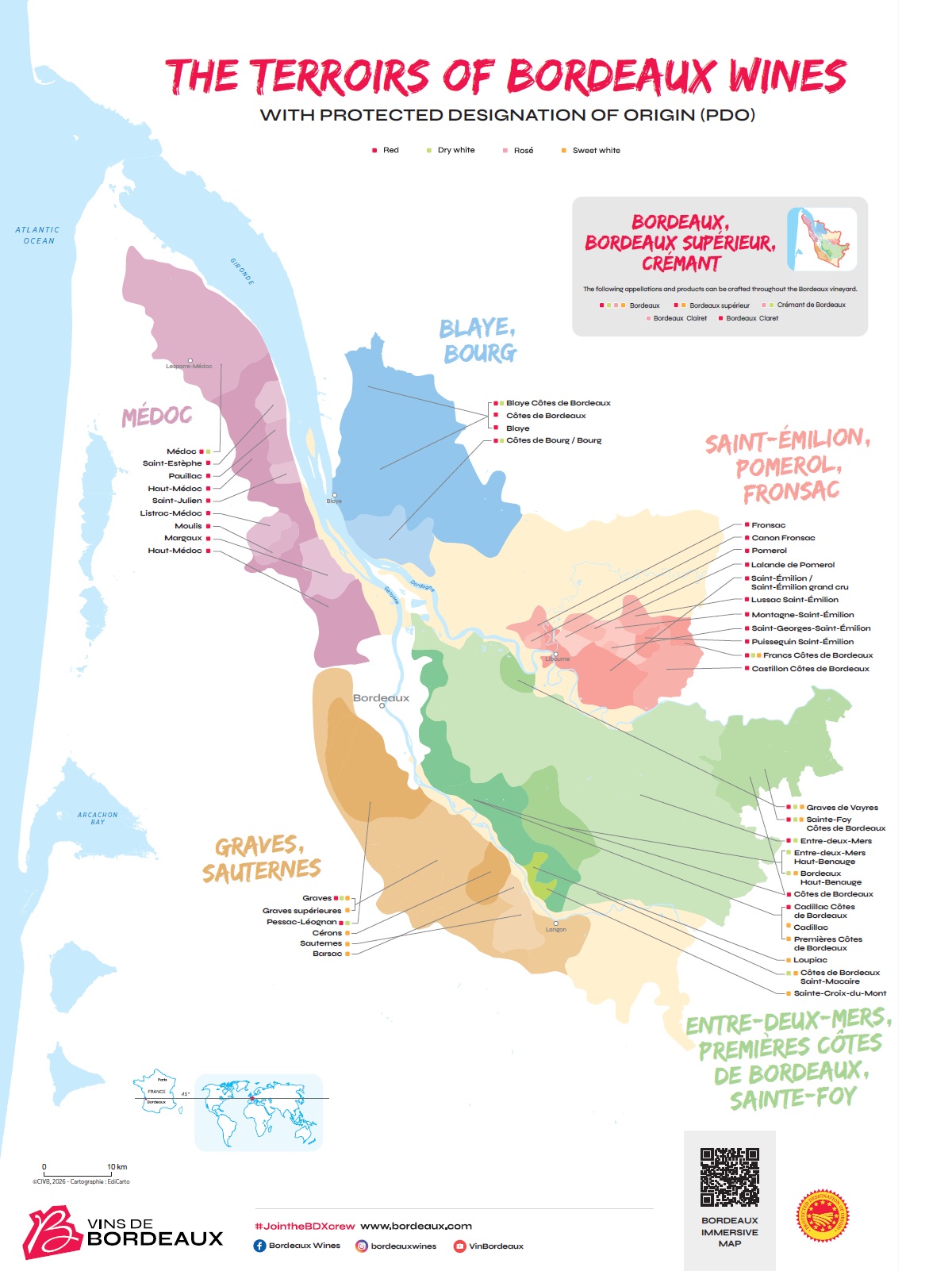
Earlier this year I began paying more attention. I’ve seized several occasions to swirl, sip or otherwise talk wine with regional professionals in Paris. I met some friendly Blaye producers at the release party for the 2026 Pudlowski bistro guide; I chatted with Bordeaux region tourist officials at press events; I attended the prestigious Medoc and Sauternes tasting at the 1855 Classification in Paris; I spoke with several Saint Emilion producers at Wine Paris; I’ve stayed on the Bordeaux page of a wine list long enough to order a white Graves one evening and a red Graves another—how daring! And I took a long look at the map of the Bordeaux winegrowing region, where I saw how a traveler—how I—might to radiate from the city of Bordeaux to the five major subregions of the greater Bordeaux winegrowing region, seeking different kinds of wine and non-wine experiences in each direction.
With these notable if haphazard steps, I came to the conclusion that gaining an education about Bordeaux—the city, the region and the wines—would be an enjoyable personal project and a worthy professional one.
It isn’t that I’m going all in and devoting myself to Bordeaux full-time. I’m too much of a France generalist for that. But over the coming year or so, I’ll be publishing a series of articles about different ways and places to get a Bordeaux education—the city, the region, the wines. Snippets already appear on France Revisited’s Facebook page, and on my personal Linkedin and Instagram pages.
In a recent article in The New York Times, the paper’s chief wine critic Eric Asimov wrote “nobody in Bordeaux is drinking Bordeaux.” He’s the wine expert, and already speaks Bordeaux fluently, so I trust him on talking about wine. But as a travel expert, I know that travelers from other regions and countries (and from Paris) do drink the wines of Bordeaux when in Bordeaux. I suspect that you will as well. Because however conversant you may now be in French wine, the city and the region are the best places get a Bordeaux wine education.
That’s where I’m headed. Please join me in this upcoming series as I go about obtaining a Bordeaux education.
© 2026, Gary Lee Kraut