

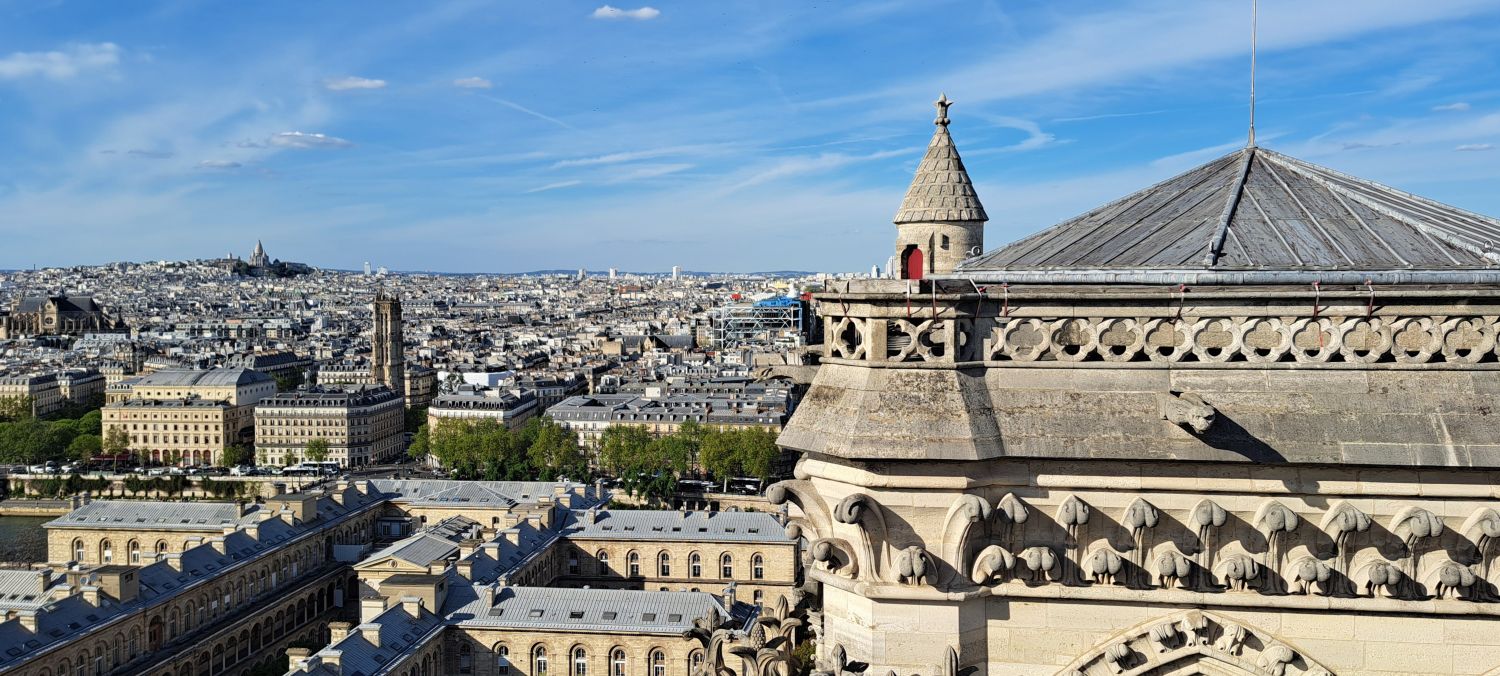
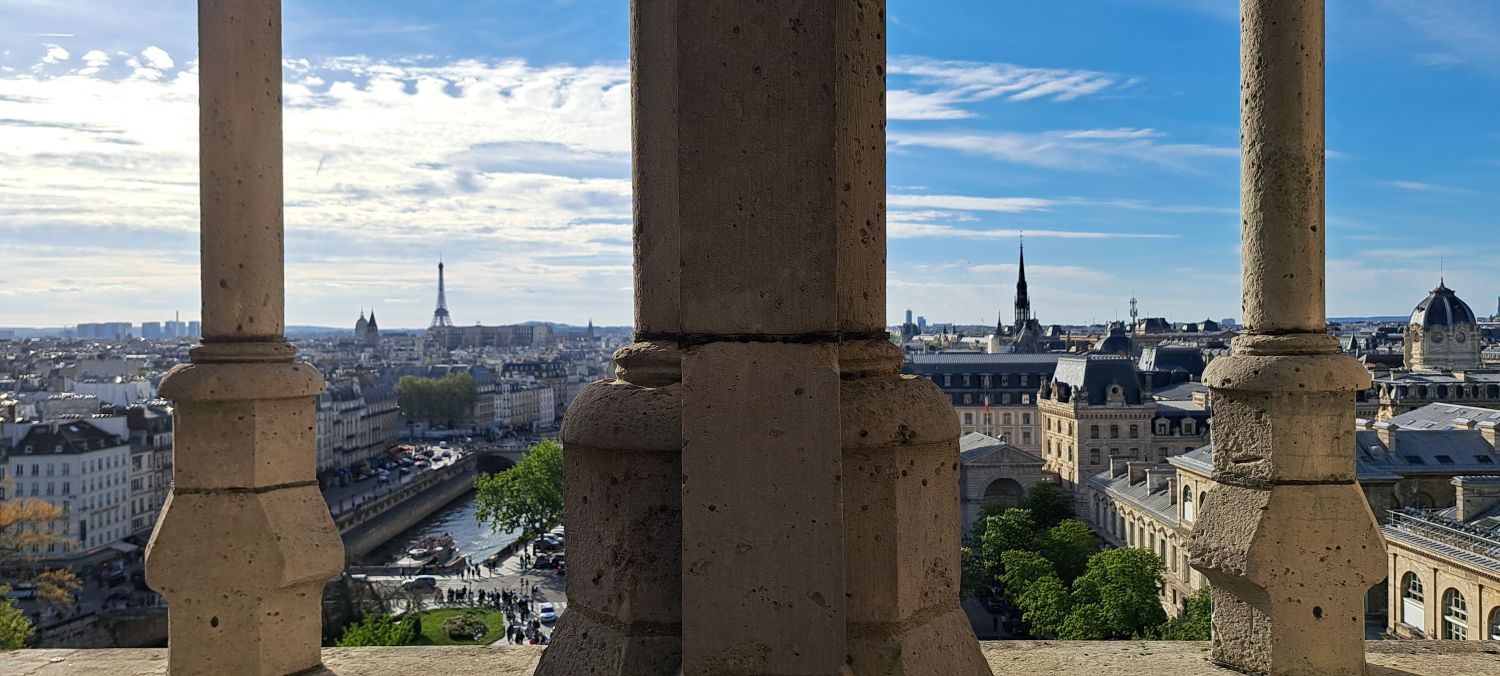
View from atop the south tower of Notre-Dame de Paris to the north tower and beyond to Sacré Coeur Basilica. Photo GLK.
Quaismodo would be impressed were he to return now to the cathedral that he inhabited as Victor Hugo’s beloved and maligned hunchback. He would immediately feel at home within the stone walls and wooden frames of the towers of Notre-Dame. Yet the cathedral has also changed and brightened since he knew it as Hugo’s fictional bellringer in the 15th century. There are new elements and much has been restored over the centuries, including its most recent restoration from the fire of April 15, 2019. But I imagine that Quasimodo would be enthralled as we were as we climbed the southern tower, examined gargoyles and chimeras, took in the extraordinary view, stood before the great bells, and descended through the northern tower.
As you would expect, the 360-degree view of Paris is well worth the effort of climbing 424 steps, despite the chicken-wire enclosure from which we take it all in: the city’s rooftops and monuments, church towers and spires, river and bridges, and the spire of Notre-Dame itself rising right before us.
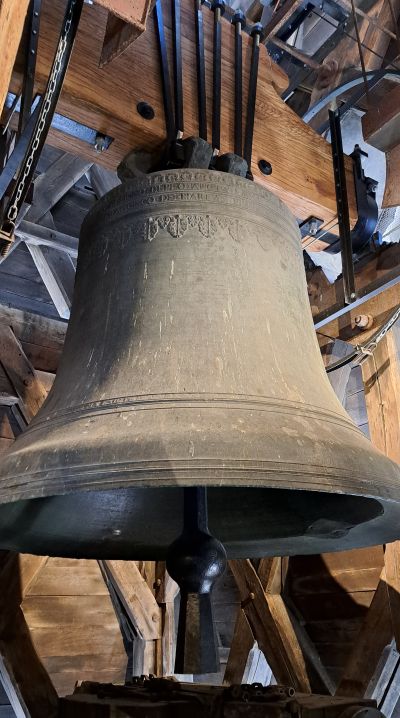
The view over the city isn’t all that makes this visit worthwhile. There’s more to the new climbing route than the grand view. Quasimodo would be in awe to stand face to face, as we did, with the cathedral’s two great bells or bourdons, though these aren’t the ones that he so loved to ring: the 6-ton bourdon Marie, cast in 2012, which sounds a do, and the 13-ton bourdon Emmanuel, cast in 1686, which sounds a fa. The latter is France’s second largest bourdon after the 18-tonner known as La Savoyarde at Sacré Coeur Basilica, the church that we see on the hill to the north.
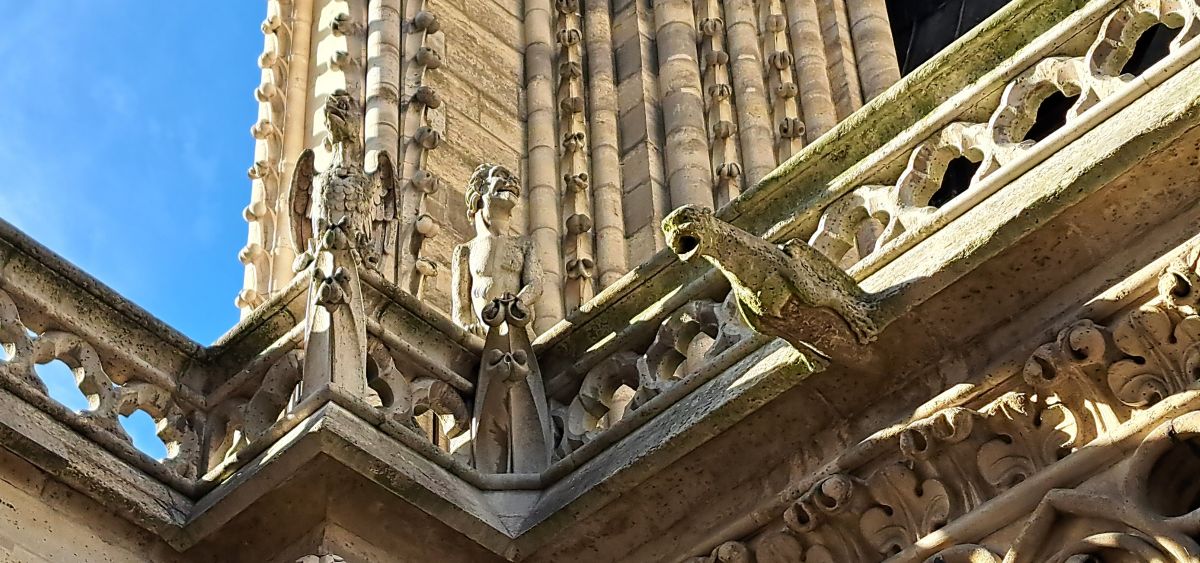
In bringing the hunchback to life on the page in 1831, Hugo also called for new life to be breathed into the then-dilapidated cathedral. Over the ensuing decades, appointed architect Eugène Viollet-le-Duc honored that call by leading a massive restoration while also reimagining missing or degraded elements, taking liberties here and there. The tower route gives a close-up view of several of the 54 animal and demon chimeras that he and an assistant designed. Those that were heavily damaged during the fire of 2019 have recently been replaced with copies, as has Viollet-le-Duc’s spire of 1859. Even if none of these were known to Quasimodo, we are tempted to do as he did and “spend whole hours crouched before one of the statues in solitary conversation with it.” But visitors today don’t have such luxury of such time when visiting the towers.
My own climbing group, comprised of journalists specialized in cultural heritage, had the enlightening pleasure of touring the towers in the company of Viollet-le-Duc’s current successor, Philippe Villeneuve, chief architect in charge of the restoration and reconstruction of Notre-Dame de Paris since the fire.
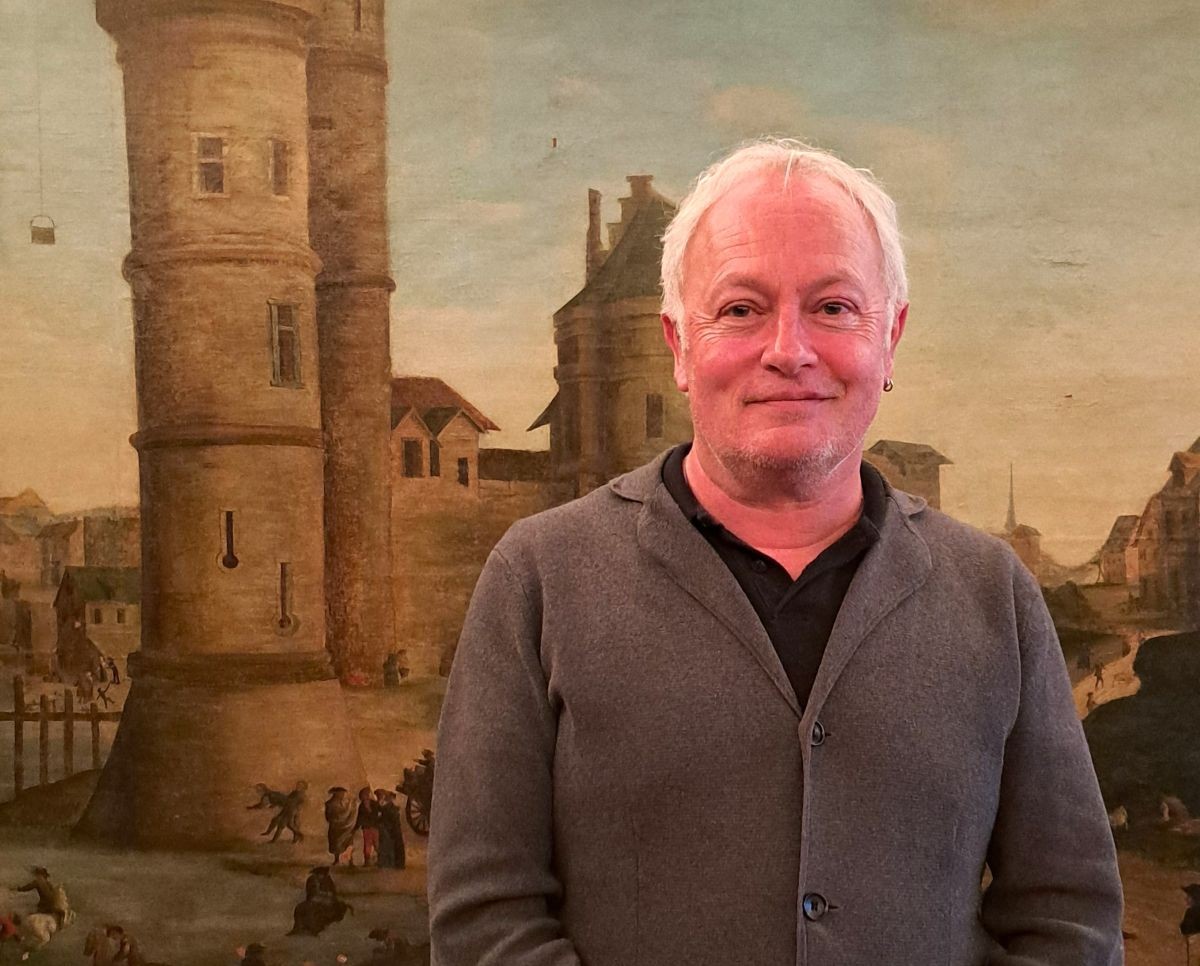
As we rose, he steered our eyes to various eras and elements of construction and major restoration. The current restoration work in response to the fire will likely continue through 2028, he said.
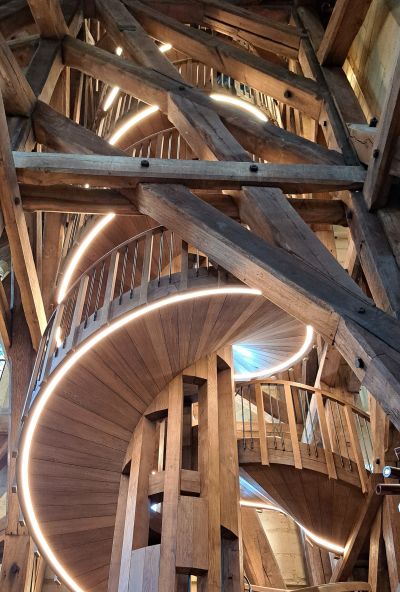
Even without Villeneuve’s insightful company, you’ll see along the way two major markers of his conceptual work. First, the massive oak spiral staircase, partially in double revolution, that Villeneuve designed for the passage from the second landing to the medieval stone staircase in the tower. Villeneuve’s staircase was shaped and puzzled together by an exceptional band of carpenters in Normandy. Throughout our visit, he sang praises to the dedicated, high-level artisans he’s worked with over the course of the restoration. As he points up to his work, a glimpse of the peak of the spire tatooed on his arm peeks out from beneath his sleeve.
Second, from the top of the south tower, you’ll look out to the real spire rising from the roof. It’s crowned by the flaming golden rooster—symbol of France and of the resurrected monument—that Villeneuve himself designed to replace the fallen, damaged rooster that has now been placed in one of the chapels inside the cathedral. On this national monument belong to the State, not the Church, the rooster crows above the Cross. View the full spire, accompanied by bells, on the 15-second video below.
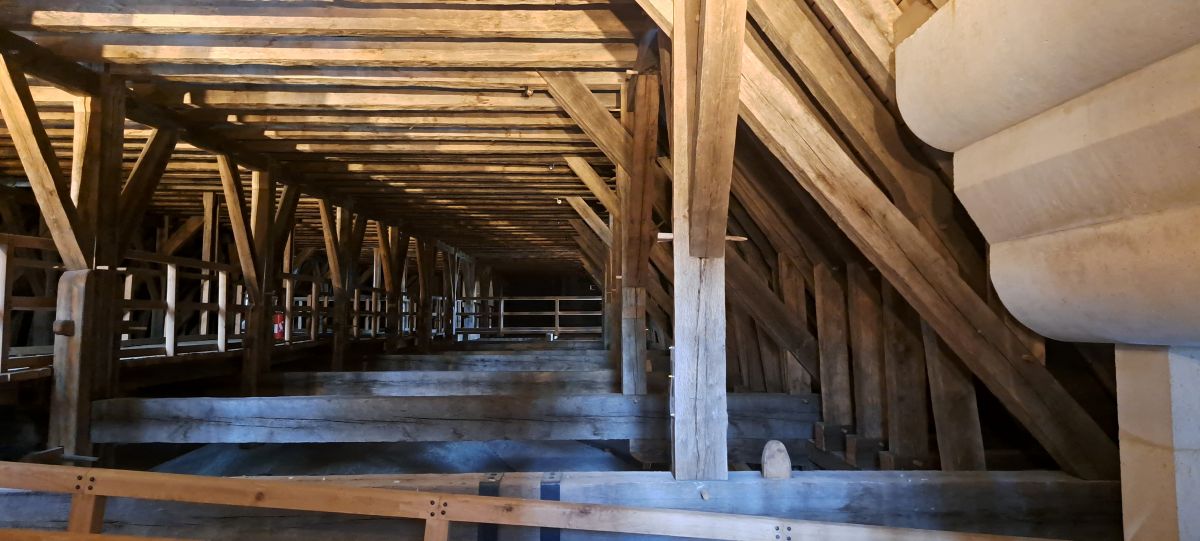
On the way down, we glimpsed through windows “the forest” of oak beams, cut from throughout France, that form the roof beams. They replaced the medieval forest where the fire originated before consuming it into the night before the eyes of the world.
No more than 26 visitors are allowed to start the climb per 15-minute time slot. Contrast that with the lengthy queue down below leading to a shoulder-to-shoulder shuffle along the cathedral floor. Comparatively, a visit to the towers, culminating with the grand view (even if limited to 5 minutes), feels semi-private, nearly exclusive.
All that’s required is a timed ticket, to be reserved in advance, at a cost 16€ or free for under 18s and adults with the Paris Museum Paris or the Passion Monument pass. While you needn’t be a high-level athlete to climb the 424 steps to the top, do be aware of your own limitations before undertaking the endeavor. The winding staircases include some narrow passages less than 18-inches wide as well as low sections where someone over 5’10” or so is well advised to watch their head.
Along the way, there are levels to pause on, where one can learn a few historical tidbits on information panels about the towers and the bells. There is no elevator. There is no WC. Families are discouraged from bringing children under 6.
Timed ticket to the towers of Notre-Dame should be reserved only through the official site managed by France’s Center for Historical Monuments. Even free tickets require reservations.
From great heights in architectural history to great heights in culinary history
Epilogue: From great heights in architectural history we crossed over the Seine to great heights in culinary history as we pursued our conversation with Philippe Villeneuve at one of Paris’s other celebrated tours, La Tour d’Argent (The Silver Tower). That’s the famous gastronomic institution with the stunning view of the Notre-Dame’s chevet, the portion of the cathedral that radiates in an eastern flourish. Even with the crane and scaffolding that remain on that side of the cathedral, the view from the upper-floor restaurant is a sight for well-heeled, well-fed eyes. We, however, settled into the bar on the ground floor, where we were entertained and informed by Villeneuve’s insightful, cutting, wit-laden accounts of these past seven years of restoration—the wonder, the toil and the beauty of the work on the one hand and the egos, the politics and the back-stabbing on the other. Listening to his vision of architectural and decorative triumphs and failures and to his expression of emotional zeniths and nadirs, the current guardian of the temple seemed to embody both Viollet-le-Duc and Quasimodo. His thirst was quenched with water brought not by Esmeralda, however, but by a polished server from the Tour d’Argent.
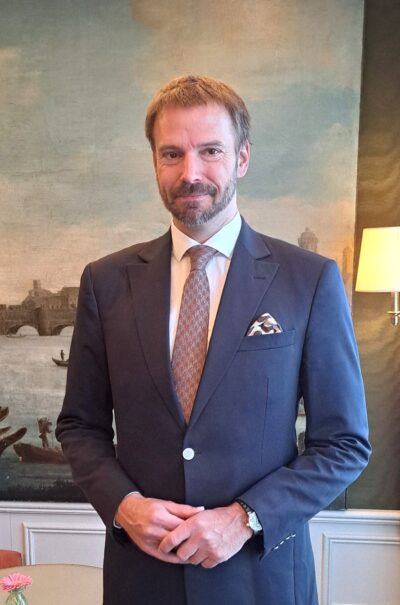
As a further treat, André Terrail, owner of the Tour d’Argent made a gracious appearance. While the restaurant is heir to a history that begins with the creation of an elegant inn on this site in 1582, Terrail is heir to the celebrated restaurant that his grandfather, also named André Terrail, purchased in 1911. It was then a ground-floor restaurant, raised to the top in 1936. The Tour d’Argent has now developed into something of a “village,” to use the current Terrail’s term, with its restaurant, its rooftop and ground-floor bars, its grocer next door, its bakery across the street, and beside that its rotisserie. There’s even an apartment with the fab view that can be rented for the night (1800€).
Despite the Tour d’Argent’s visual affinity for Notre-Dame, I’m not promoting it here as the natural extension of a visit to the towers, however many Michelin stars its restaurant may or may not receive in a given year (in 2026 it has 1). Nevertheless, one’s got to go somewhere after the extraordinary experience of climbing to the top of the cathedral, and it might as well be somewhere that’s also earned its place in Paris history and lore, someplace accessible, if not to Quasimode, then perhaps to the likes of Victor Hugo, Viollet-le-Duc, Philippe Villeneuve, and yourself.
© 2026 by Gary Lee Kraut
Also read Notre-Dame: An Interview with Witnesses to a Dazzling Restoration