

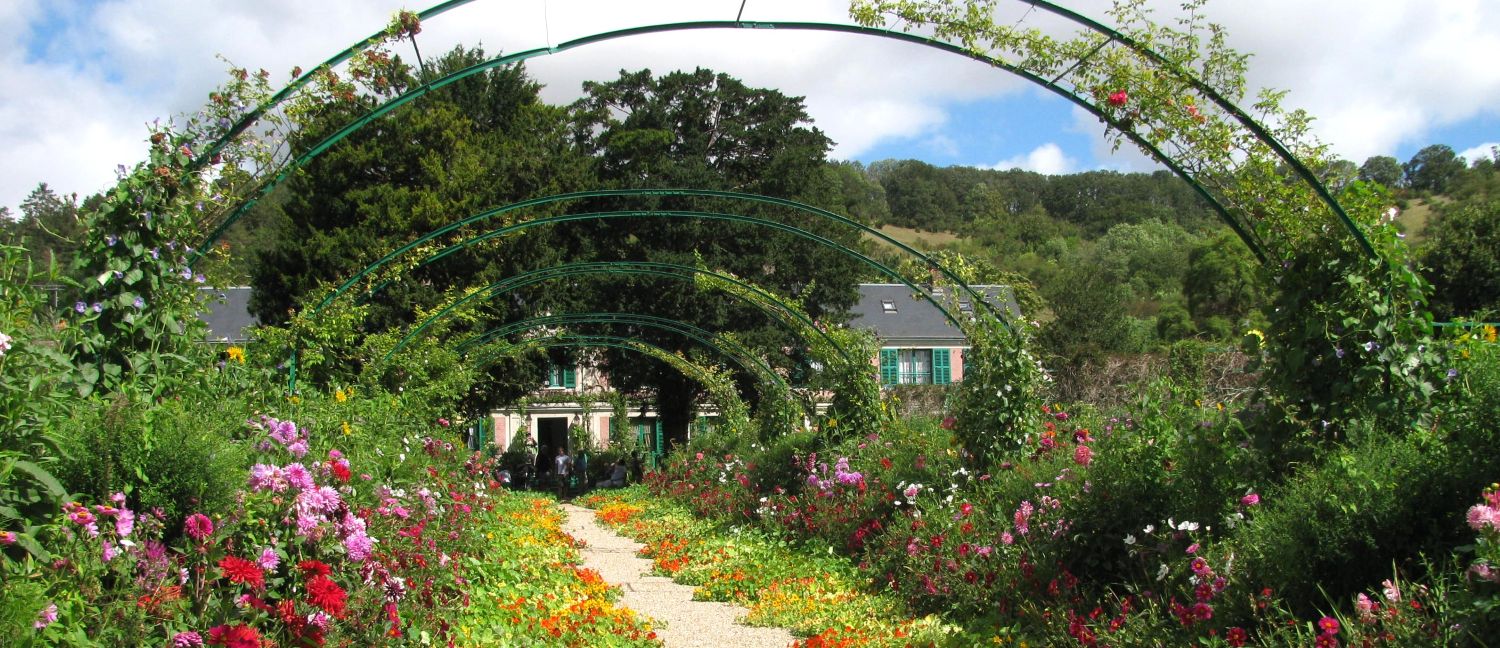
Why and how to combine a visit to Monet’s House and Gardens at Giverny with a visit to the Château de La Roche-Guyon, whether on a daytrip from Paris or as part of your explorations in Normandy.
* * *
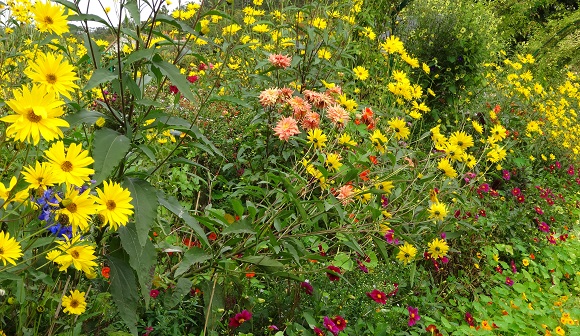
Over the years I’ve visited Monet’s gardens and lily pond at Giverny at various times during its open seasons, late March to early November, at different times of day. I’ve seen, as Monet did, the gardens’ flora at various stages of bloom and rebloom and its relationship with the water, the sky and the air. As in painting by the master Impressionist himself as he focused more and more on his backyard in his 70s and 80s, the view expresses itself in a different way each time. I visited Giverny again recently in early October (the photos in this article are from then) and was once again impressed by how it had maintained its lushness and color into the fall. The season’s calm, flower-friendly weather had certainly helped.
Visitors following the crowded paths around his pond and through his garden inevitably find the site lovely and photogenic, though it’s Monet’s relationship with the site rather than the site alone that makes it worth a detour. I’m tempted to say that it isn’t worth going out of your way for Giverny if you aren’t curious about the artists. I won’t judge–but there, I said it anyway. So my first recommendation when considering a trip to Giverny is to get curious about Monet (1840-1926), about his sustained form of Impressionism and his family life (two children with his first wife who died shortly after the birth of their second child, cohabitation then marriage with a long-time friend who had six children of her own after their father had abandoned the family), and to visit it with the naked eye rather than through a camera lens, with plans to (re)visit Monet’s work at the Orsay Museum and more particularly at the Orangerie Museum and at the Marmottan Monet Museum.
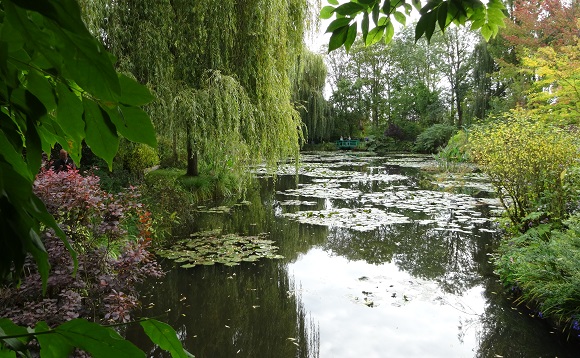
Combine a view of the (controlled) natural landscape that he created here with a view of the work that he produced (in books or online if not in museums) and Giverny (pronounced jee-ver-nee) can feel uplifting. Though I’d rather visit with sunny skies or gentle white clouds, overcast weather also allows insights into Monet’s world and outlook. I’m less fond of a rainy-day visit, but even from under umbrella the gardens remain Monet’s.
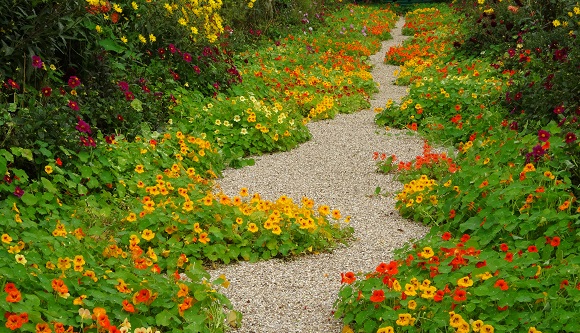
Having said that, I find myself less than encouraging when advising travelers on whether or not to trek out to Giverny, 45 miles west of Paris, on a daytrip. I’m concerned that the weather will be bad (Giverny is, after all, at the entrance to Normandy, which is not known for sunny days) and/or the crowds overwhelming, and that even on a pleasant day you’ll will spend 90 minutes or more getting out there only to find Giverny lends itself to a 45-minute visit.
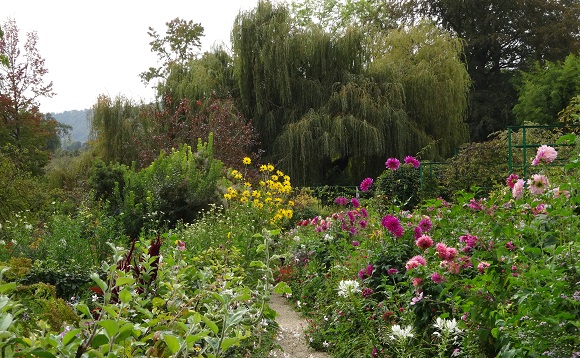
I know, there’s more to do in Giverny than a visit chez Monet. There’s the Monet boutique (as you can imagine, his paintings lends itself to appealing merchandising), some pretty (yawn) art galleries, an enjoyable and occasionally insightful Giverny Museum of Impressionisms, whose restaurant is a decent place to lunch, and there’s the relatively little visited tomb of Monet in the village churchyard. So it is possible to spend a couple of hours here. Also, though often ignored, the nearby town of Vernon, which is where you stop if coming this way be train, gives a sense of an ordinary small-town France for those who’ve never visited on. Still, I’m not always convinced that it’s worth the time for those who have little of it in Paris. As I say, I’m a big fan of Monet’s place. I just don’t think that making it a destination in and of itself is right for everyone.
La Roche-Guyon
Add La Roche-Guyon to the day, however, and I can be more encouraging. La Roche-Guyon is a village along the Seine just 6 miles to the east Giverny, on the opposite side of the Normand border. Though the castle of La Roche-Guyon is mostly empty inside (that is, the public parts are since a portion is private chateau, which belongs to the La Rochefoucauld family, is still inhabited) it can be visited inside, where it gives glimpse of several strong points in French history.
This was strategic site overlooking a loop in the Seine near the border between Normandy and France proper, at a time when the powerful dukes of Normandy and their kinship with crown of England posed a threat to France. The visitor understands the strategic importance of this site on the French side of the border by hiking through stairs cut into the limestone cliff and ascending into the 12-century tower so as to take in the tremendous view over the Seine Valley.
The Duchy of La Roche-Guyon also made a name for itself in the 18th-century for the interest of leading members of the Rochefoucauld family in the literature, science and politics of the Enlightenment. The main portion of the castle dates from that period as does the recently rehabilitated 9.4-acre vegetable and fruit garden.
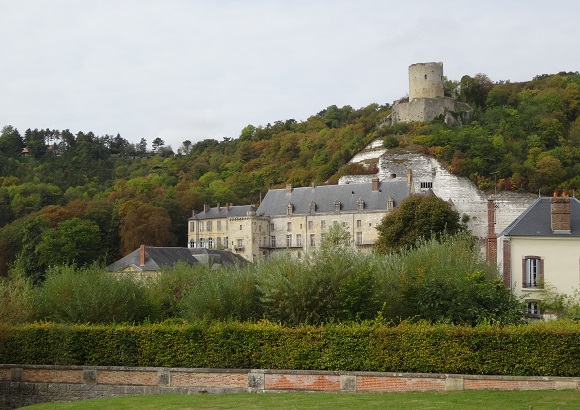
Also, there’s WWI history here since the castle served as German Marshall Rommel’s headquarters during the lead up to D-Day 1944. Casements were dug into the cliff were to store munitions used especially by anti-aircraft guns placed at the top of the cliff.
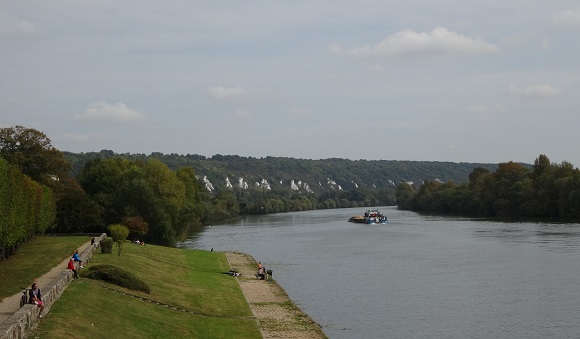
Even without visiting Giverny, I recommend a stop at La Roche-Guyon for those flying into Paris and wishing to drive directly to Normandy to visit the D-Day Beaches. It makes for a nice break in a tiring day between the airport and your hotel in Normandy while introducing the history of Normandy and the German occupation during the Second World War.
Alternatively, you can stop at both Giverny and La Roche-Guyon on the way back from Normandy, but the timing can be more difficult if returning in the afternoon since you’ll want to avoid driving into Paris during rush hour.
In order to do the Giverny – La Roche-Guyon combo or to visit La Roche-Guyon on its own, you’ll need wheels since public transportation is too complicated and infrequent to get here.
© 2014, Gary Lee Kraut (modified 2026)