

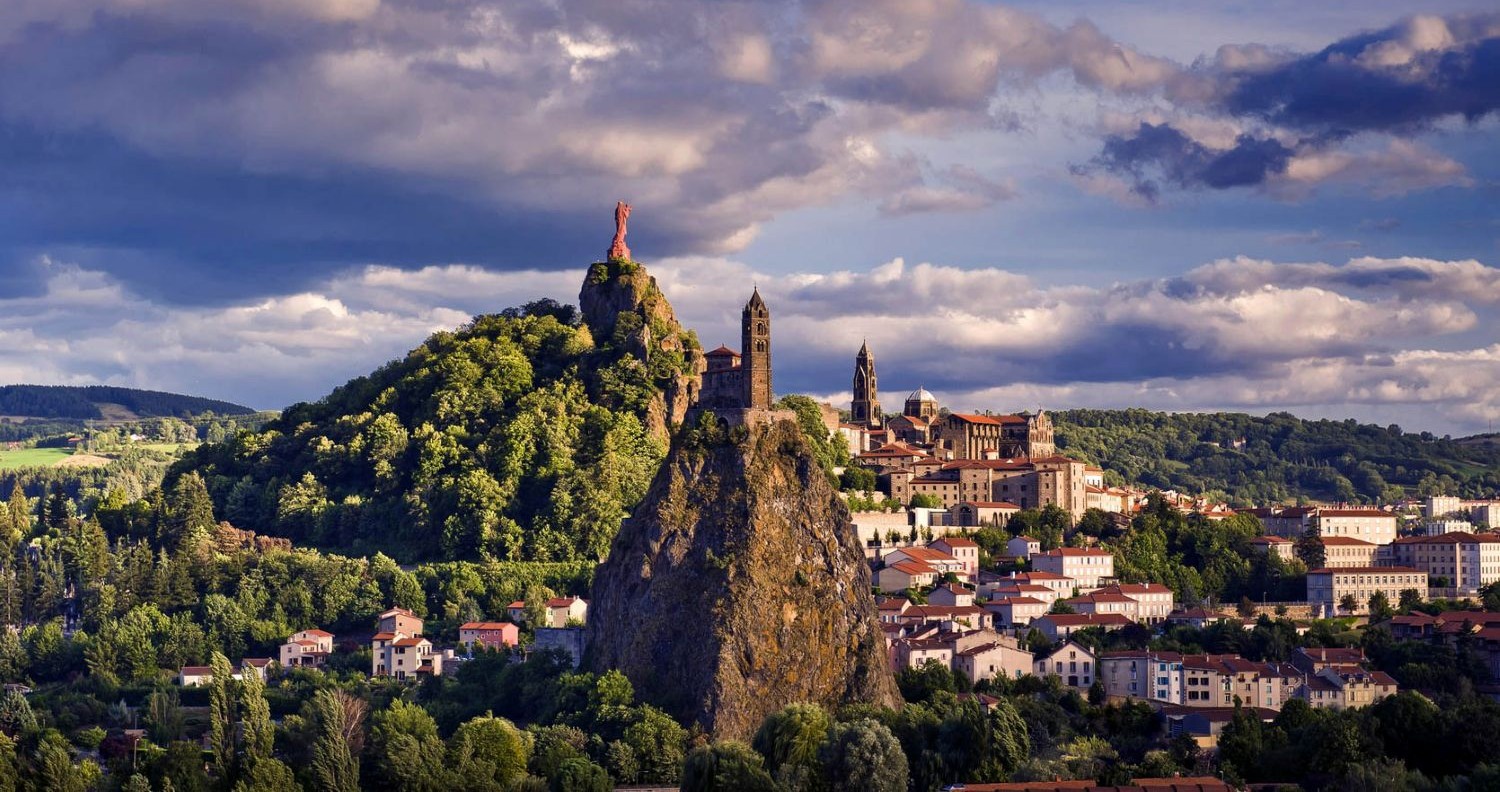
Photo above, Le Puy-en-Velay. (c) Luc Olivier
It gives me a cheap thrill to think that you’d start reading this article in order to discover—with admiration or contempt—which towns and cities in France limit their cooperation with the national government in enforcing immigration laws. You might be imaging a bistro where lawless lefties confront national thugs. Or a wine region where baguette-wielding winegrowers are protecting grape-picking Syrians and Somalis against soldiers in riot gear. Would you then be inclined to visit such a place? Or would you immediately despise it?
How exciting to think that a travel article of mine could be read with admiration or contempt. But at the risk of disappointing anyone, and of ruining my chances of this piece launching a lengthy Reddit thread, let’s have another look at that title.
Villes Sanctuaires en France, the network in question, translates as Sanctuary Cities in France. The words align. But the concept does not. There are no trumped-up stand-offs in these towns and cities. French authorities have indeed stepped up operations to net undocumented migrants and would-be immigrants who’ve overstayed their visa, including a few gently reminded post-Brexit Brits. But round-ups, deportation and resistance are unlikely to occur in the peaceable destinations in France’s Villes Sanctuaires network. What makes them like-minded is a different kind of sanctuary.
Here, sanctuaire refers to a sanctuary in the sense of a shrine, “a place in which devotion is paid to a saint or deity,” to quote Merriam-Webster. Villes Sanctuaires en France therefore brings together villages, towns and cities in France that have shrines—Catholic, at that—that can be visited by the general public.
But wait, wait!
Before clicking away because candle-lighting pilgrims are less Instagrammable than baguette-wielding winegrowers, let me tell you one of my favorite aspects of travel in the secular nation in France: You can just as easily visit these sanctuaries and shrines for the heck, the fun, or the creepiness of it—I do—as you can out of a sense of spirituality, hope or devotion—others do. You can visit them, as I do, out of pure curiosity, out of an in interest in history or architecture, and to observe how people visit shrines. Or don’t visit the shrine at all when in these sanctuary cities, because the municipalities mentioned here also pay tribute to the gods of beauty, construction, gastronomy, wine, nature, even meaning, whatever that may mean. And here’s the best part: respectful as we must be when visiting a shrine that doesn’t speak to us spiritually, we don’t have to fake adoration, because blasphemy is not a crime in France. Praise be!
For the 18 municipalities within the Villes Sanctuaires network, the shrine or sanctuary is only half the picture. The site’s pious handlers work in tandem with local tourist officials, who also seek to promote other aspects of tourism within the municipality and in the surrounding region. Each member-municipality tells a different story in which the spiritual retreat or Catholic pilgrimage site or otherwise sanctified structure can lead to explorations regarding other heritage sites, gastronomy, wine, hiking, and nature—or vice versa.
France today is a secular state not a Christian or Catholic country. Its culture is a mixed bag that doesn’t stem from the history of a once-dominant religion. Yet the history of Christian, particularly Catholic, dominance in France has left major physical markers. Among them, a fascinating, photogenic and/or curious variety of heritage sites that the traveler is invited to encounter. Christianity’s religious and political history in France also includes a record of harms, dangers and abuses that are also worth examining. Thankfully, one is no longer forced to or expected to honor religiously inspired historical sites or the shrines of these sanctuary cities in specific ways, yet all are accessible to visitors whatever one’s views. By contrast, travelers are highly unlikely to visit a synagogue or mosque or temple if they don’t identify with the associated religion. Even travelers who do identify rarely visit those, whereas the vast majority of non-Catholics visitors to France will enter a church. Think Paris’s Notre Dame Cathedral.
Pilgrims and wayfarers, reverent and irreverent
For the purposes of this article, let’s use both portions of Merriam-Webster’s definition of a pilgrim: 1: one who journeys in foreign lands: wayfarer. 2: one who travels to a shrine or holy place as a devotee.
The Villes Sanctuaires en France network was created in 1994, not as a direct promotional tool so much as a way for municipal tourist officials and overseers of shrines and sanctuaries to exchange information and learn from each other regarding the welcoming of religious and non-religious pilgrims. Only recently, in December 2025, did the association hold its first organized press workshop.
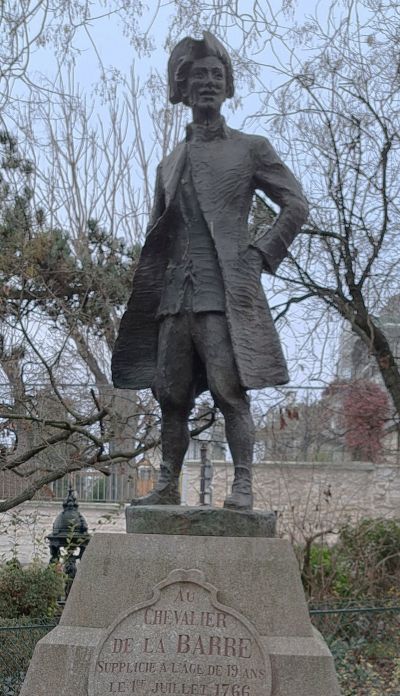
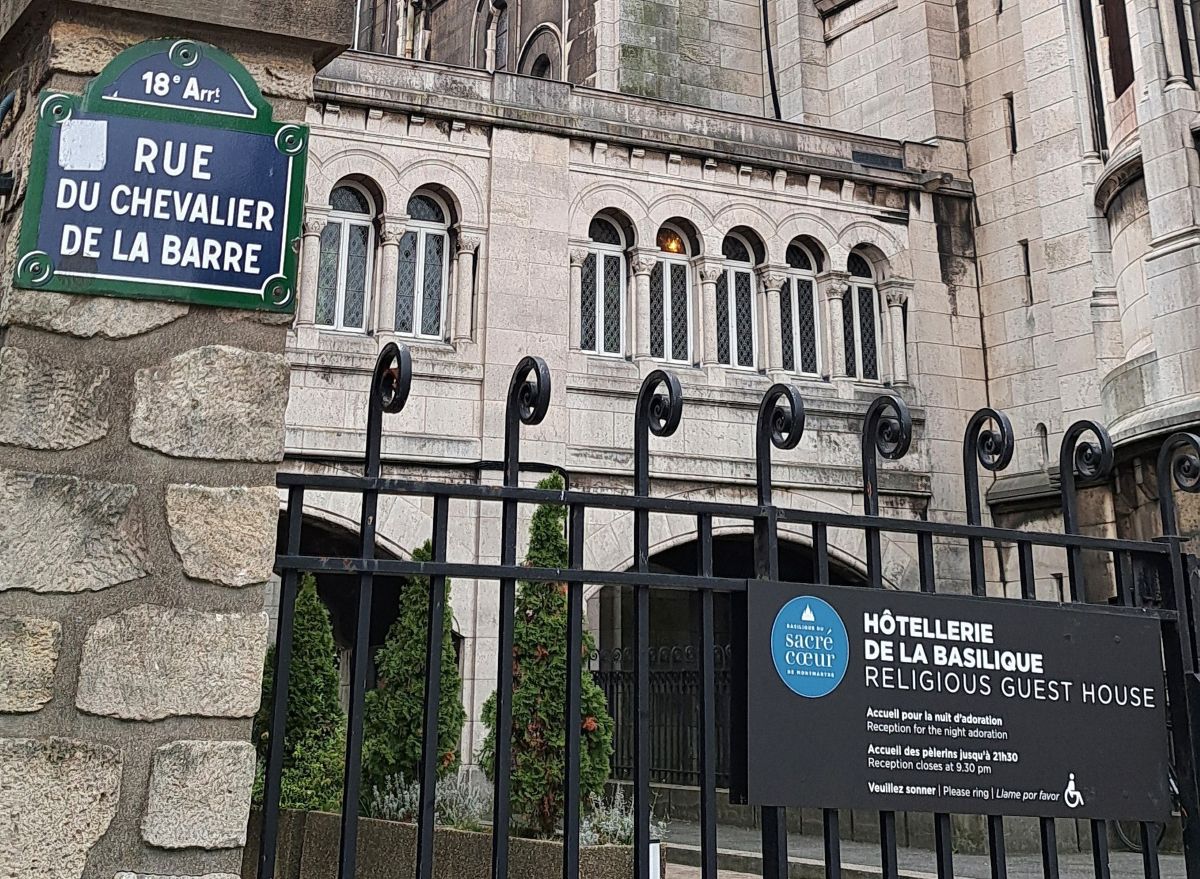
The event took place in Paris at the religious guest house attached to Sacré Coeur Basilica in Montmartre. Entrance to the hotel is from behind the basilica on a street named for the Chevalier de la Barre. The chevalier was a nobleman who was arrested then tortured and executed in 1766, at the age of 20, because he vandalized a wooden crucifix and failed to take his hat off when a religious procession went by, along with other impious, blasphemous acts. He immediately came to be seen as a secular martyr for the Enlightenment against the dangers of religious intolerance of Church and its bedmate State. Laws today sanction those who incite hate and violence, whether with respect to religion or other matters, while the Chevalier de la Barre remains a symbol of the right to irreverence with respect to something some consider sacred.
It isn’t at all ironic that the street near the Catholic holy site is named after the ill-fated young fellow. Instead, the street was baptized in honor of la Barre at a time when Sacré Coeur was under construction, during the political tug-of-war between Catholic and anticlerical forces in France. While the church rose with one vision of French society, the naming of the street and a statue to la Barre (located in what is now a dog park nearby) were intentional reminders of changing social priorities.
Together, the street and the church, the young nobleman and the devout pilgrim, the charming grey cobblestones and the massive white dome, coexist today as attractive reminders of how travelers—whatever kind of pilgrim they may be, whatever reverent or irreverent thoughts they may have—can experience, learn from and share it all.
The Sanctuary Cities network naturally plays the spiritual card in promoting tourism—unless it’s the tourist card in promoting spirituality—but these villages, towns and cities needn’t be seen as religious destinations alone. Whether you consider yourself a religious pilgrim or a wayfarer in a foreign land, or both at once, or sometimes one, sometimes another; whether you’re a theist (aficionado of a god that does or doesn’t act on human affairs) or a nontheist; whether you go in for blasphemy, heresy, dogma, or the smell of incense; whether you consider yourself spiritual or not; whether you wish that this article had been about deportation or resistance, now that you’ve come this far in, stay with me as I present the 18 current members of the network of Sanctuary Cities in France.
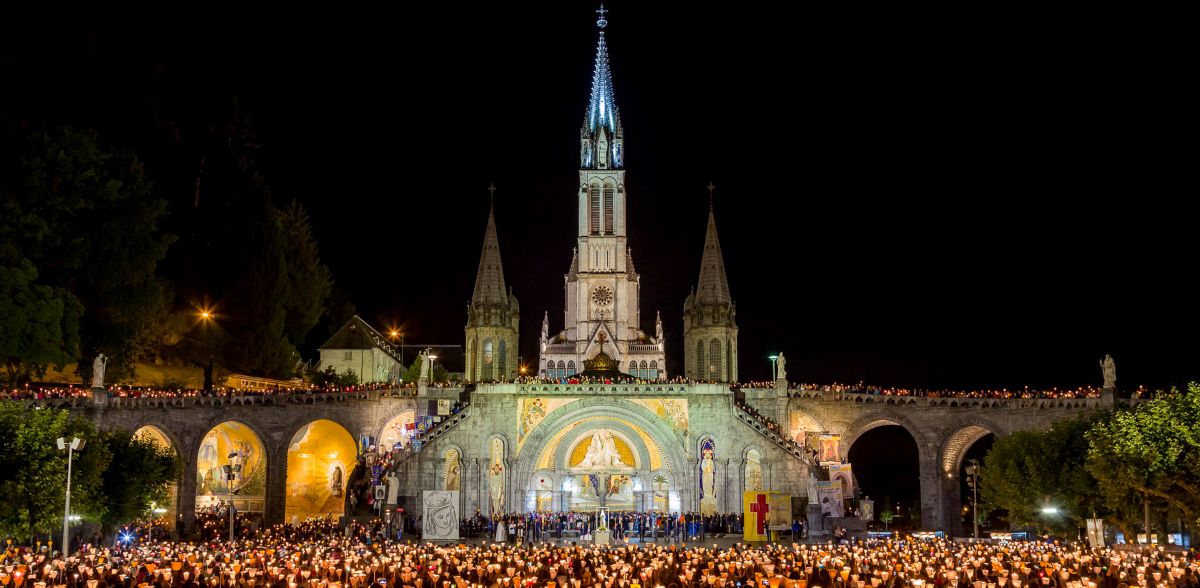
Municipalities in the Sanctuary Cities network vary from world-renown destinations to little-known village.
Among the most famous of these Sanctuary Cities is Lourdes, a town of 13,800 whose shrines attract 3 million visitors per year. Lourdes is primarily known as a spiritual destination relative to sainted Bernadette Soubirous (1844-1879), who is said to have had 18 sightings of Mary from February to July 1858. Personally, I’ve little curiosity about Bernadette herself, but the spirit moves me to visit Lourdes soon so as to witness the Bernadette phenomenon up close and because Lourdes makes for an excellent starting point for exploration in the Pyrenees. There’s a visitable fortress just above the town. A funicular goes to the summit of the Pic du Jer. Further from town, another funicular goes to the even more impressive summit of the Pic du Midi, and there are numerous trails for hiking expeditions in the region. (Stay tuned for my 2026 Lourdes article.)
The photogenic tidal island of Mont Saint Michel is another major destination among these Sanctuary Cities.
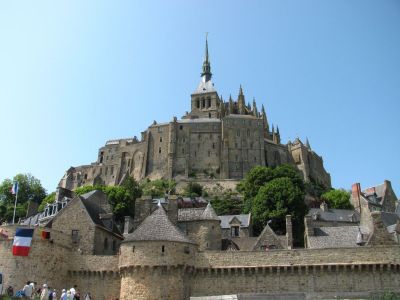
While you don’t need to carry an all-knowing deity in your thoughts to be curious about the place, I encourage all travels to delve into the fascinating religious, architectural, technological and geopolitical history of the site, whether through reading or by hiring a specialized local guide, even if only to understand the successive eras of construction on the mount, culminating with the 13th-century portion known as “the Marvel.” I suspect that, unlike visitors to Lourdes, only a small percentage of the millions who come each year to Mont Saint Michel is aware that the mount maintains an active Catholic community—the men and women of the Monastic Fraternities of Jerusalem. In the village and hard to spot among the souvenir shops and pricey omelets, the House of Pilgrims is a sanctuary for visitors who seek churchly hospitality.
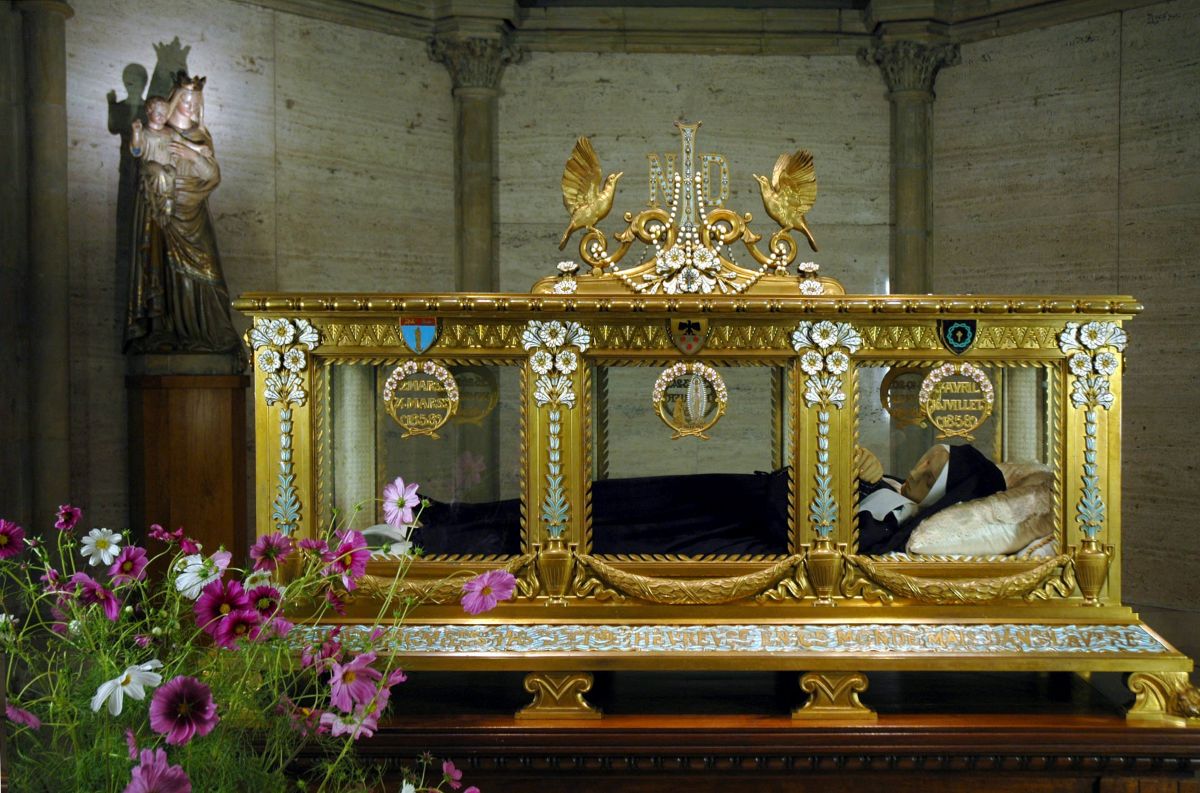
Nevers, population 33,000, is located on the edge of two major travel and touring routes and receives relatively few foreign visitors. It’s on the inner edge Burgundy but without vineyards to draw wine travelers, and it’s the starting point for the 415-mile Loire by Bike route but cyclists largely pedal along paths further downstream. Religious pilgrims, however, know Nevers as the place to marvel at the body of Bernadette of Lourdes. Why aren’t her remains in Lourdes to greet the 3 million visitors there? Because Bernadette of Lourdes joined the Sisters of Charity and lived her short life as a nun in Nevers, where she died at the age of 35. Personally, I’m not planning a trip to Nevers just for that, though I do soon expect to take in the embalmed sight. I’ll also check out the Ducal Palace, have a peek in at the earthenware museum, find a potter to visit, and seek out a lively bistro or good restaurant. I enjoy the sense of discovery of exploring a bypassed town with an eclectic mix of offerings with an eye to encountering something or someone that sparks my interest. (Again, stay tuned for an upcoming article.)
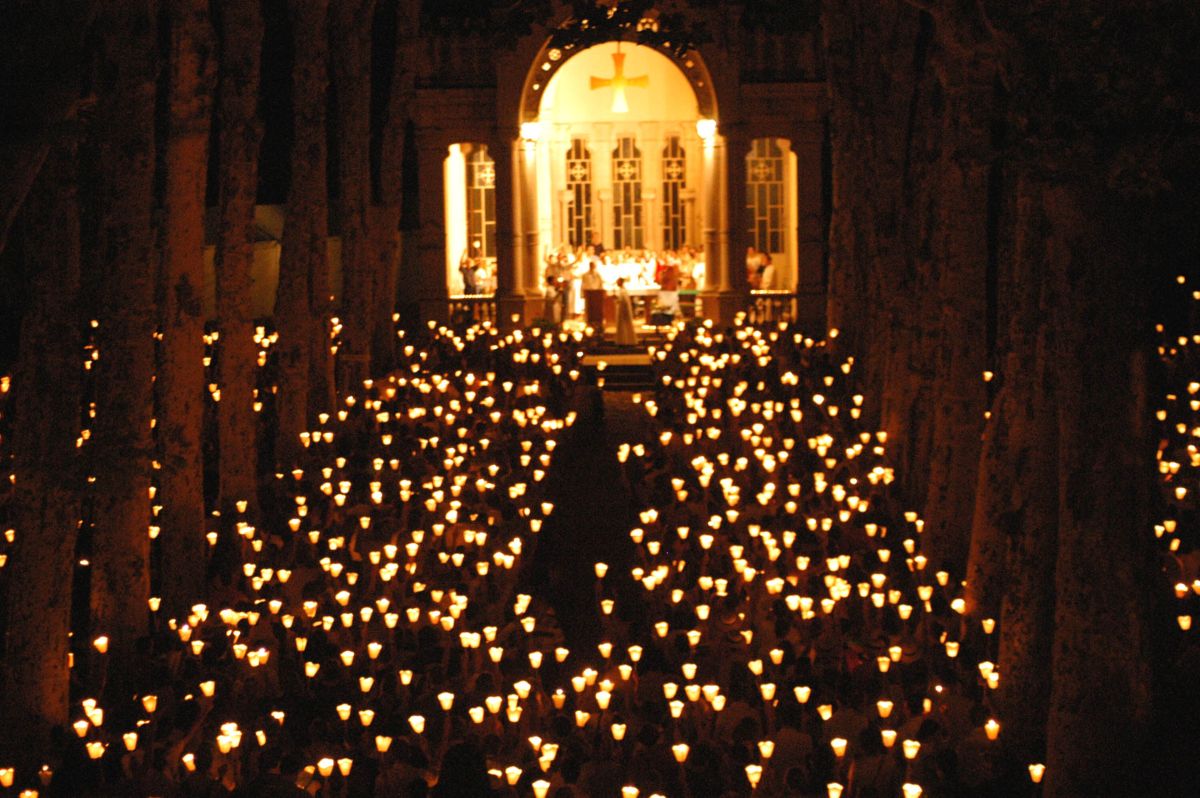
Further south in Burgundy, Paray-le-Monial’s Sacré Coeur (Sacred Heart) Basilica represents Romanesque architectural splendor to Catholic and non-Catholic visitors alike. The former may specifically come to embrace their sense of the Sacred Heart. It was in this town that Margaret-Marie Alacoque claimed to have had three visitations from Jesus from 1673 to 1675, revealing his heart and its meaning to her on the third. The basilica therefore welcomes a significant influx of religious pilgrims. They may or may not also be gastronomic pilgrims, interested in Charolais beef. Charolais is common in much of France but the massive Charolais breed of cattle has its origins in this region and is named for the town of Charolles, eight miles east.
Spirituality needn’t be the main draw of a town or city in the sanctuary network. Wine can be the magnet, at least it is for me when I think of Cahors, which stands out in the wine world as the primary home for malbec in France. Whether you prefer your wine blended, blessed or 100% malbec, or don’t drink at all, no visitor venturing this deep into the country would skip the city’s key heritage sight: the 900-year-old Saint Etienne (Saint Stephen) Cathedral. Within the bowels of the cathedral awaits the Holy Headdress, venerated as the supposed head covering placed on Jesus as he was wrapped in a shroud for burial. Some will stand before it in awe and adoration. Others will raise an eyebrow, shake their head, and think “Oh, the things that people will believe.” But all visitors check it out. Beyond the malbec, the cathedral and the old town, it is the House of Pilgrims at the convent of Vaylats that gives Cahors sanctuary status and provides hospitality for hikers on the Way of Saint James of Compostela.
Sometimes the distinction between religious and non-religious pilgrim-tourists is blurred because they’re all following the same path. That’s the case at Rocamadour, one of the most visually stunning of these Villes Sanctuaires due to way the village hugs the canyon wall. Rocamodour is just over an hour’s drive north of Cahors or east of Sarlat. Visitors of all stripe climb the 216 steps to the sanctuary, then gaze upon the Black Virgin, a little statue with a large reputation.
Brive-la-Gaillarde, just over an hour’s drive north of Rocamadour, is better known for its rugby team than for its caves of Saint Anthony of Padua. But there it is, a sanctuary dedicated to the patron saint of all things lost and found.
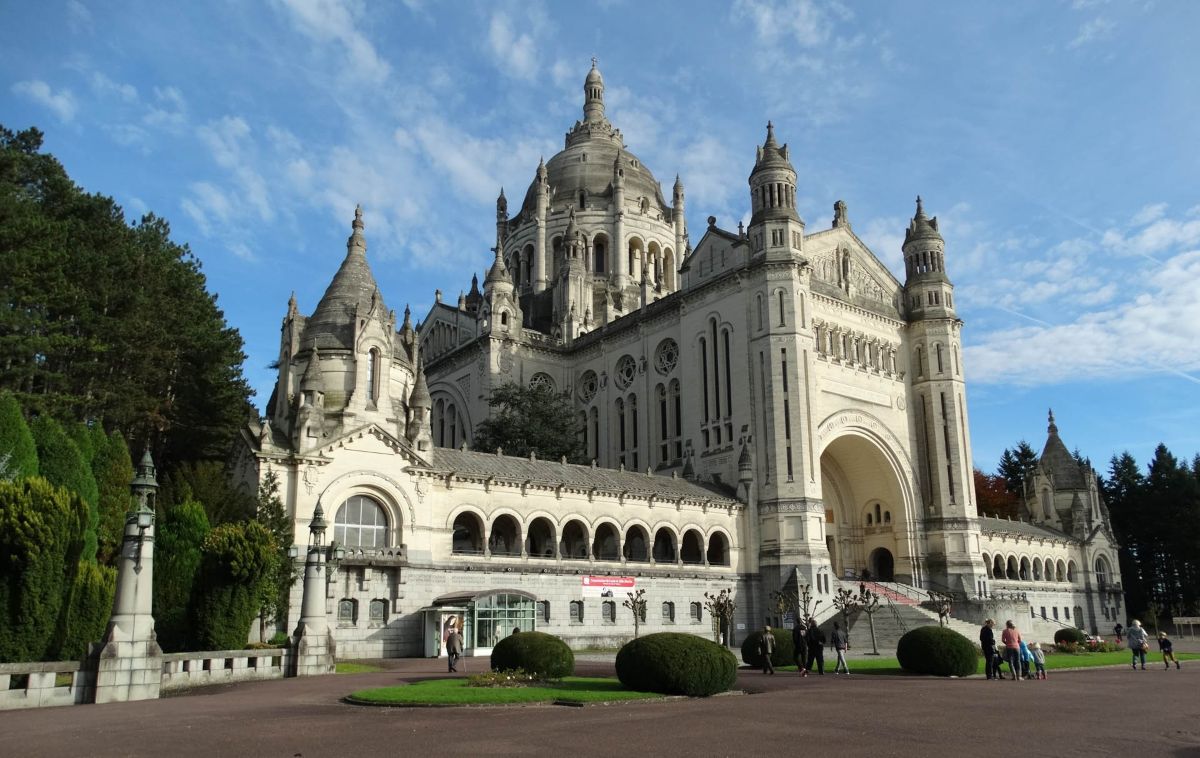
Many trains to Bayeux and the D-Day Landing Zone of Normandy stop in the sanctuary town of Lisieux. Looking out the window as the train approaches the station, you see an immense basilica on the hill, its architecture inspired by Paris’s Sacré Coeur. The basilica honors Thérèse Martin (1873-1897), better known as Saint Thérèse of Lisieux. I’m not suggesting that any but the most Teresian travelers take time from their brief tour of the Landing Zone to visit Lisieux, but it’s nice to know what you’re looking at as you pass by on the train.
Teresa’s sainthood marks much of the lower half of Normandy. Her devout parents, the canonized couple Louis and Zélie Martin, lived in Alençon, and their shrine there brings that town into the fold of Sanctuary Cities. Alençon is, however, better known in knitting circles for its lace-making history, as presented in its Lace Museum.
Saintes-Maries-de-la-Mer’s annual pilgrimage in May attracts Romani from throughout Europe and tourists from far and wide into the Camargue Regional Park. Yet for most visitors, it’s the natural sensations of its marshes and bottomlands that set the Camargue apart along the Mediterranean.
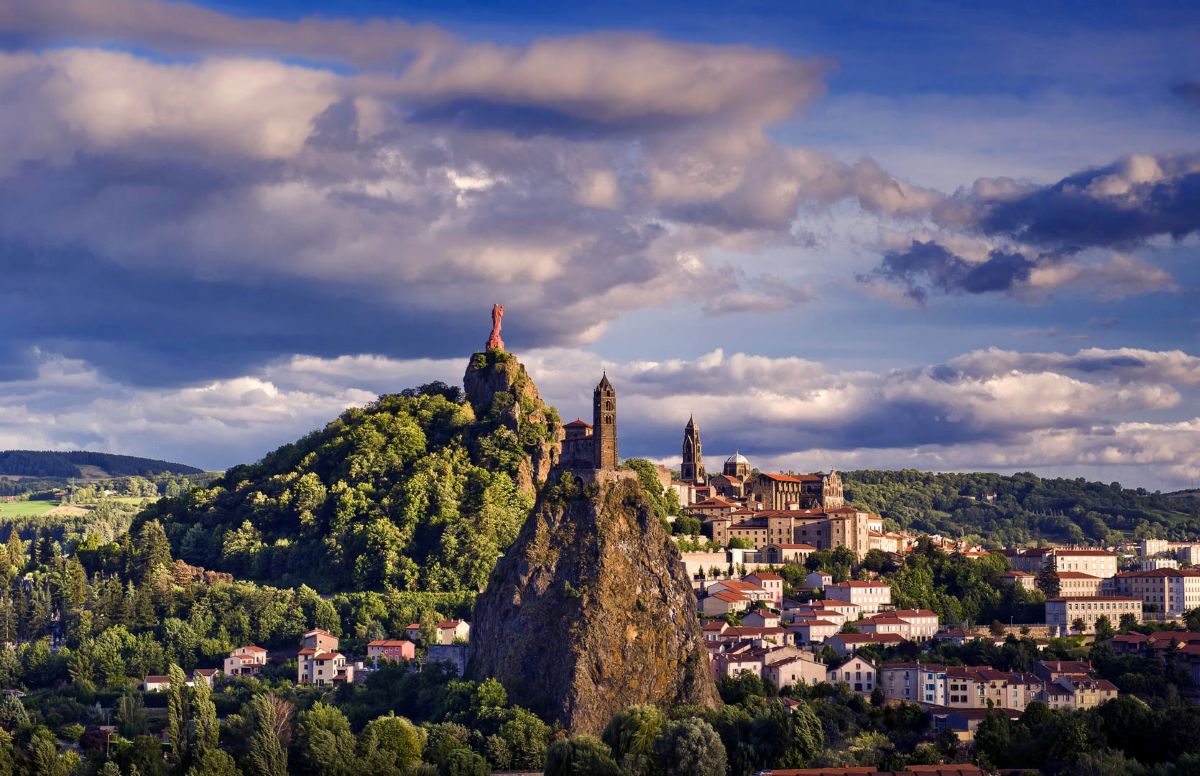
Most foreign travelers would be surprised to learn that the Loire River, which evokes royal chateaux and easy-going biking along its east-west flow, starts deep in an off-track area of southern France and builds up strength on a northerly flow. Le Puy-en-Velay, population 19,000, in the Haute-Loire (Upper Loire) department, is the first city along the river’s course. Its geographical location and the presence of an ancient shrine to Mary earned it a major place on the map for medieval pilgrims arriving from the east and northeast on the Way of Saint James. Le Puy’s Notre-Dame Cathedral, its monumental statue of Notre-Dame de France, and its nearby volcanic chimney topped with a chapel round out its major Christian sights. But a foreign traveler is unlikely to come here unless interested in exploring the striking natural surroundings of this former volcanic region.
The sanctuary village of Souvigny also has a remarkable Romanesque church, along with the history of the first house of Bourbon—Bourbon as in future kings of France not corn whiskey. Souvigny is a 15-minute drive from the city of Moulins, home to the National Costume Center.
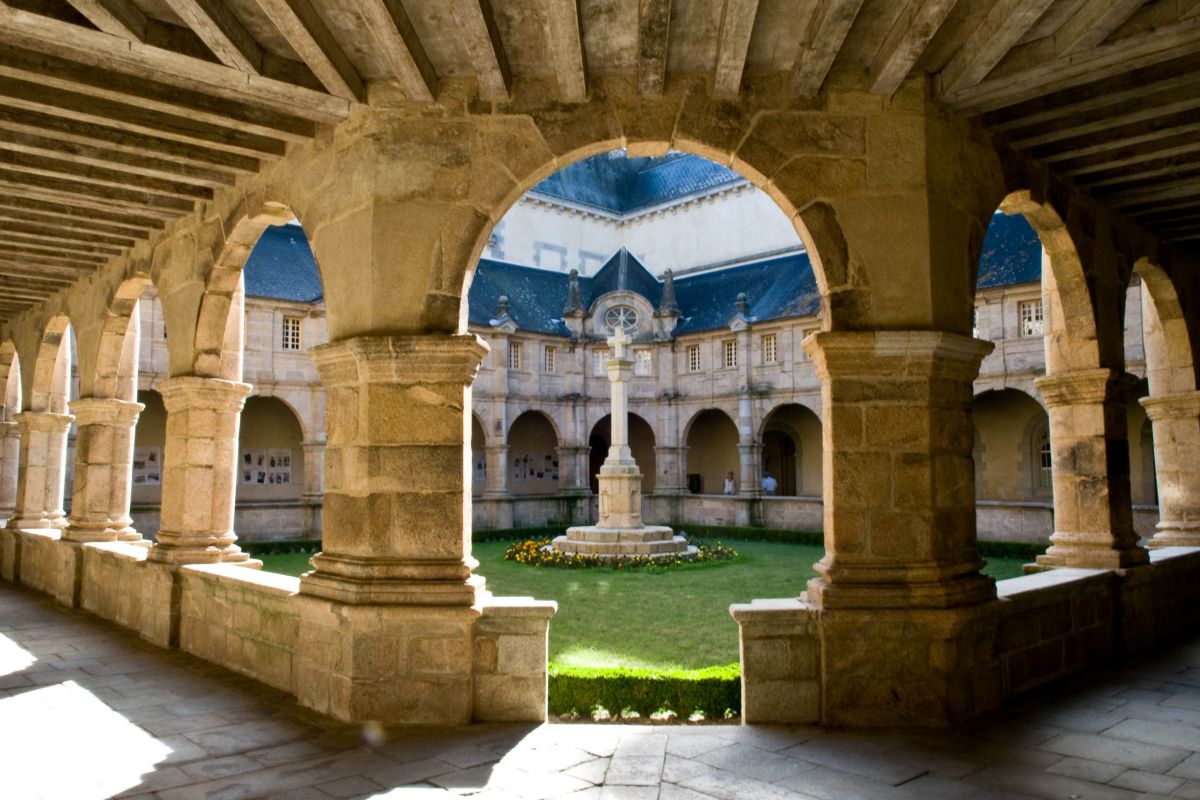
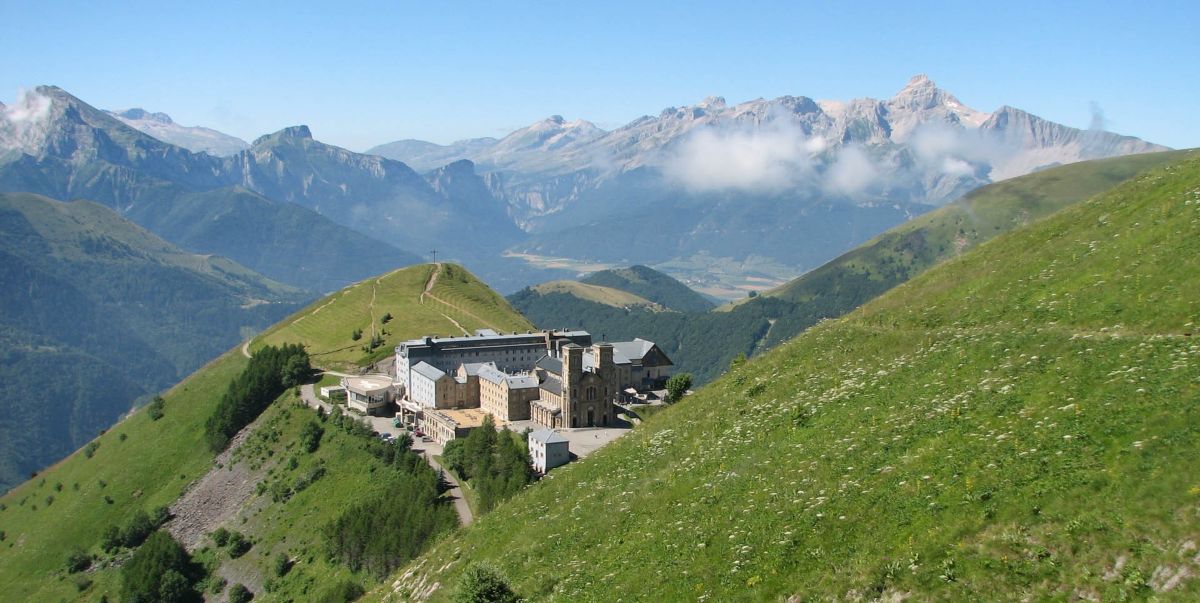
Then there are a handful of more obscure sanctuary villages and towns in the network: Lalouvesc, a remote village in Ardèche; Ars-sur-Formans, which sits quietly between the Beaujolais vineyards and Lyon; Cotignac in the backcountry of Provence; Sainte-Anne-d’Auray in Brittany; Vendeville near the northern tip of France, and La Salette, at nearly 6000 feet in the Alps. Non-religious pilgrims visiting the sanctuaries and shrines there will especially find the opportunity to commune with nature in various shapes and forms in the surrounding area.
See the official site for this network of sanctuary cities for more information about the shrines, sanctuaries, and points of interest of all kinds in and near these villages, towns and cities.
© 2025, Gary Lee Kraut